




With the Swiss Interbank Clearing Instant Payments (SIC IP) initiative now in Phase 2, Switzerland’s payments landscape is achieving meaningful new milestones, with implications for the EU and other world economies. So, what are those implications?
With over 60 financial institutions (FIs) already live and more than 95% of Swiss retail payments now being processed instantly, the effort is at an inflection point.
As the next wave of over 260 banks readies for Phase 2, experiences and insights from Phase 1 are invaluable.
These insights were served up in the recent webinar “SIC Instant Payments – One Year On, One Year to Go for Phase 2.”
Moderated by Zhenya Winter, Head of Global Marketing – Financial Messaging at Bottomline, and joined by an all-star panel of Swiss payment leaders.
Phase 1 experiences were distilled into actionable insights and forward-looking perspectives for B2B payments.
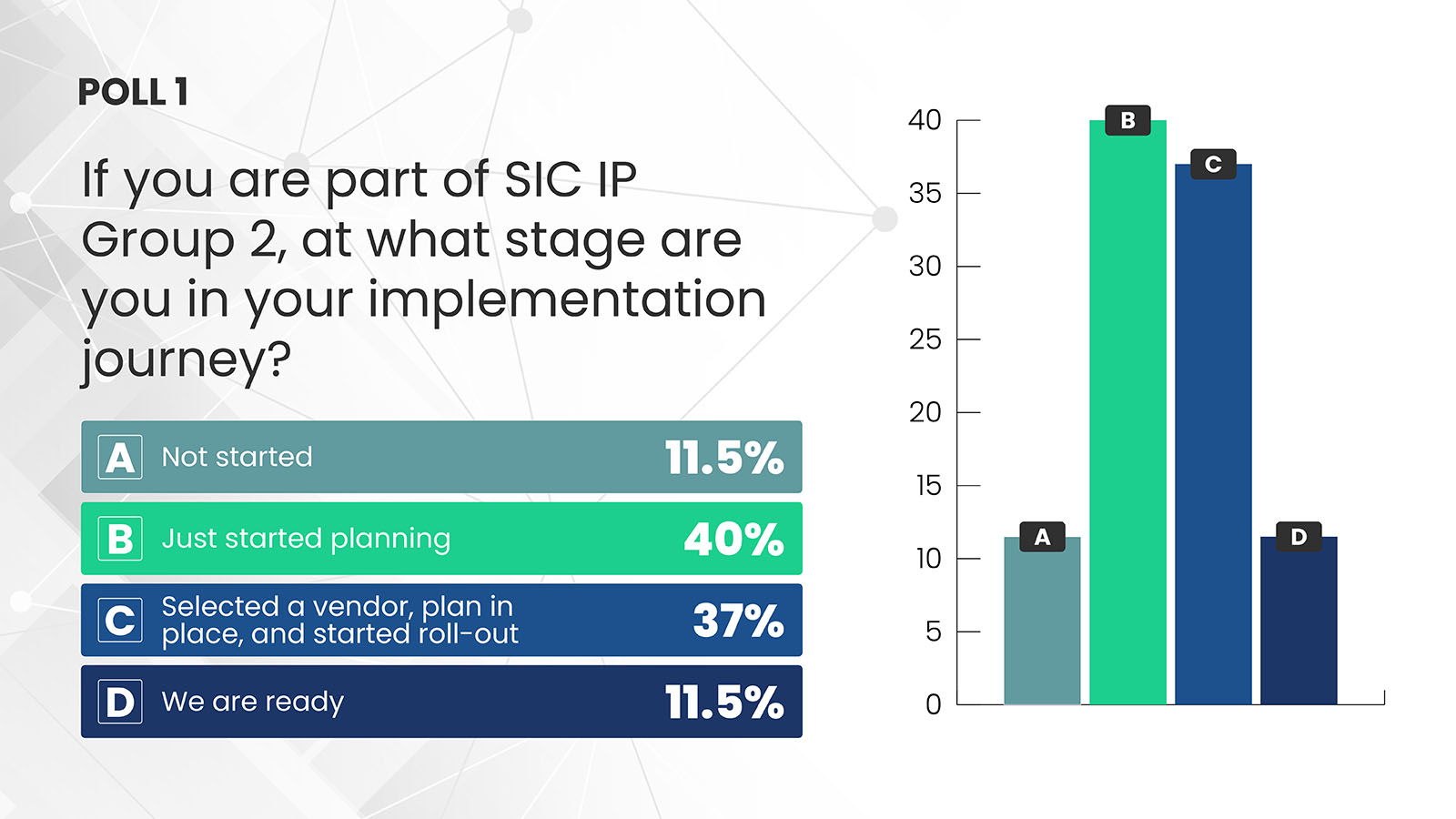
SIC IP Phase 1 Learnings: The Intricacy of Sending Payments
About 15 months after the start of SIC Instant Payments Phase 1, the Swiss payments ecosystem is seeing considerable progress.

Emphasising the importance of the service’s reliability and reach, Matthias Sailer, Managing Director at SIX Interbank Clearing Ltd (SIX), said,
“The most exciting thing is that the service is live since the 20th of August 2024…and it’s working. That’s the most important thing. It’s a stable service we can provide.”
Panelists agreed that the push to onboard additional banks by the November 2026 deadline looks good in the early going.
Sailer added,
“At the moment, we have around 70 banks reachable by our instant payment service. And out of the 70, there are 20 banks already sending instant payments.”

Nodding to the system’s operational status while highlighting the diversity of experiences among participating banks, Dennis Flad, Partner at Zurich-based consultancy t’charta, said,
“The service, especially on the SIX side, runs smoothly with good quality,” yet he pointed to “mixed feedback” from some banks about certain aspects of onboarding.
For example, he noted that “we still have a couple of [banks] that are struggling with sending payments. Sending payments has definitely been underestimated, on the bank side, for its complexity.”

Acknowledging this, Cyril Rufener, Head of Cash Transfer at REYL Intesa Sanpaolo said,
“For this specific project, it is very focused on IT capacities.
But as a cash transfer team, we do believe that instant payments are the future for domestic payment cash flow. It will enable new possibilities for clients.”
The panel’s consensus was clear: the system’s foundation is solid.
However, the next phase of bank onboarding requires more coordinated effort and early engagement from stakeholders.
Implementation Challenges: Operations, Technology, and Vendor Management
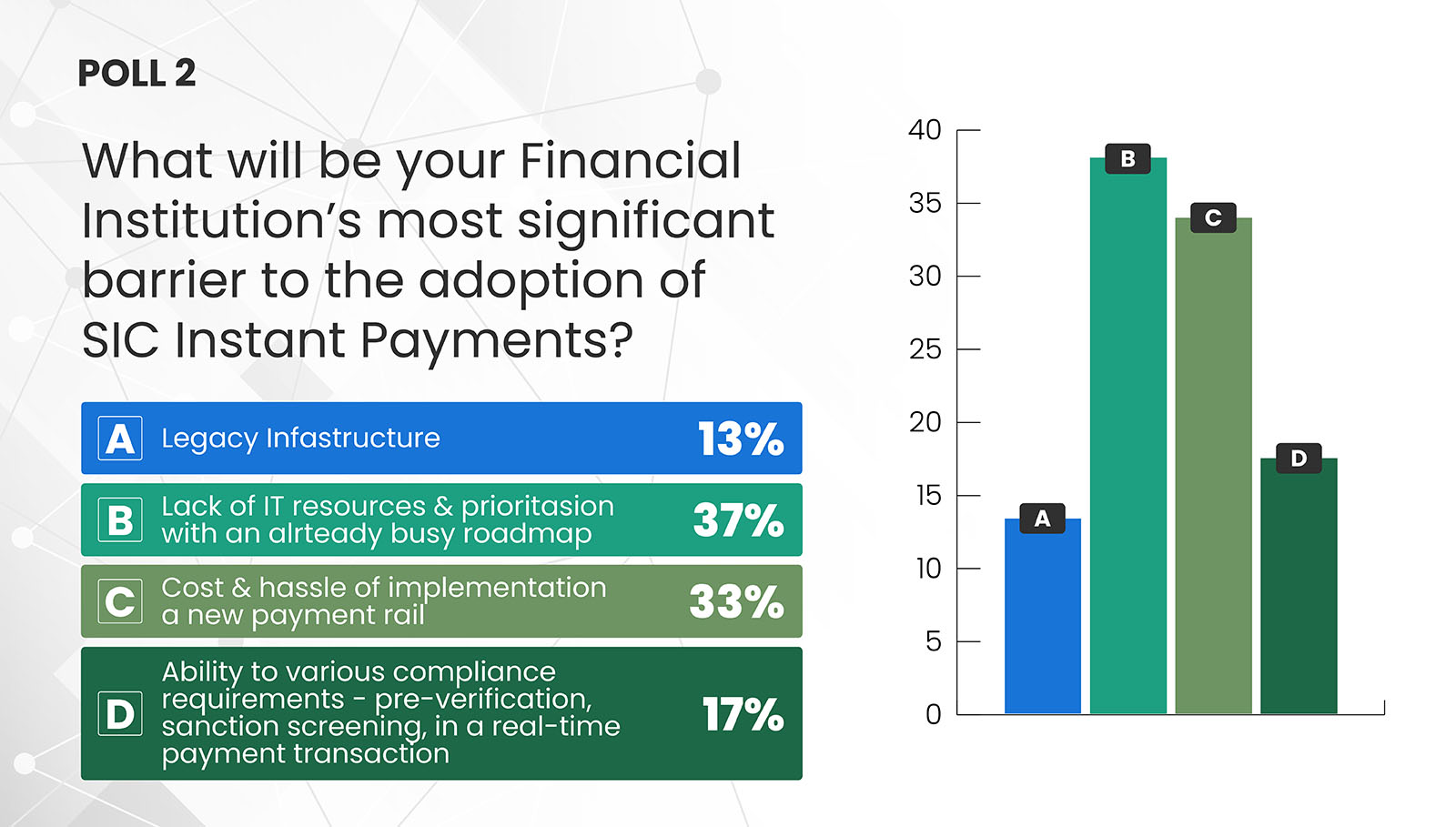
As the discussion moved from strategy to execution, the panelists started digging into the real-world challenges of making instant payments work.
Flad again observed that while receiving payments is generally straightforward, sending instant payments requires more significant modifications.
Although the goal is clear, it quickly became obvious that getting there has brought many operational, technical, and vendor-related challenges to the forefront.
“Operational processes are changing,” he said. “Monitoring and screening are changing. 24/7 operations and availability [are things that banks] need to consider when they want to offer [instant] sending services as well.”
The bigger need is cross-functional planning as this is not a pure IT project. It goes far beyond, especially if you start to make outgoing payments. You need to think across your ecosystem. It’s not just the technical aspects.
Reflecting on the internal coordination required on the bank side, Rufener noted with a touch of humour that “It was not really instant” to bring all stakeholders together on SIC IP Phase 1.
Beyond overcoming initial inertia and alignment, the team encountered some surprising discoveries.
Akin to the U.S. FedNow® Service seeing slow uptake of its instant “send” function, he said, “The incoming flow is not the…challenge. We are focusing on the step to send the instant payment, because it’s really…the biggest challenge in this project.”
Vendor management also emerged as a critical factor, particularly in relation to core banking connectivity.
Flad pointed to lingering “question marks” that needed solving, saying that while wave one banks had already tackled these issues, wave two banks could benefit from those learnings to overcome remaining obstacles.
I would encourage Phase 2 banks to leverage existing tools as part of the transition to instant.
“There are solutions on the market that are tested, proven, and working. This should all help to have projects done [cost-effectively and securely]. Basically, your project is leveraging the solutions that have been…delivered, tested, and implemented successfully with the Phase 1 banks.”
What stands out across all parties is the value of early planning, cross-departmental collaboration, and proactive vendor engagement as vital for SIC IP adoption.
Making Money with Instant Payments (and a Satisfying CX)
As instant payments become ubiquitous in Switzerland, banks are exploring business cases and profits.
Flad said, “We always ask, where’s the business case behind the instant payment?”
He added that while instant may come to dominate, “That doesn’t mean that the new normal doesn’t need to have a business case or monetisation behind it.”
With that, he pointed to one opportunity that makes a compelling case for instant B2B payments: verticals.
“We see now, for example, a lot of insurance [companies that say] ‘we really want to implement instant payments,’ and you can imagine…the volume of outbound payments insurance has. That will…be a significant volume increase.”
Meanwhile, it is important to focus at the broader potential. Real-time payments are growing, and we see that everywhere, [including] the UK now, also slowly in Europe, and everywhere in the world where you have end-to-end, real-time settlement between banks.
There’s also a generational component to instant that will influence B2B payments, and not in the far-off future.
“The younger generation expects this service now,” Sailer said. As Gen Z moves into management positions, they’re going to expect instant everything in their B2B relationships. “We need to prepare for this,” he said. “It’s not only payments.”
The collective opinion is that instant is not a compliance exercise, but a strategic opportunity to deliver new value to business clients, unlocking advanced business models.
Fraud, Resilience, and Paying by the Rules
The move to instant payments has significant implications for compliance and fraud prevention.
Rufener said security is improved by SIC IP, but added that “We expect some…long-term fine tuning on the compliance side, to make sure screening is on, and to make sure we have the maximum rate of non-rejected instant payments.”
“It’s very important as a financial institution that you look…at your end-to-end processes,” Sailer said, reminding banks and partners that SIC IP involves more than instant payments.
Faster payments shouldn’t mean faster fraud, certainly not if the right prevention tools are in place. Still, the notion of ‘faster payments, faster fraud’ came up.
“Fraud is another topic we’re working on a lot with our banks,” Flad said, pointing to drivers like “…artificial intelligence, [and] the speed that fraudsters can program fake websites,” calling these fraud issues “a big, big problem.”
Rufener and I agree that it is so important to perfect screening tools to reduce false positives and rejections, while maintaining regulatory standards.
There are different workflows between screening a standard payment and an instant payment.
You need to fine-tune your system to avoid too many false positives and, like Cyril said, I think there are opportunities in the solution to configure that appropriately, to reduce false positives in the case of instant payments, while remaining compliant.
SIC IP Phase 2: Readiness, Resource Management, and Industry Collaboration
As the industry proceeds with SIC IP Phase 2, there’s an emphasis on the importance of readiness and collaboration.
Waiting often has operational impacts and financial consequences.
“If you should have some delay, it’s not so easy to jump on the next slot because they are already full,” Sailer said. “I would ask you to take up the discussion with the Swiss National Bank if you have a major delay…and we will see what we can do for onboarding you” by 2026.
It is also vital that you leverage established solutions and providers. Platforms and outsourcing are crucial for Phase 2. This is especially important for smaller FIs with limited capabilities. Time to market should be quick.
Leveraging outsourced solutions will definitely help. And again, they are already deployed and available.
Flad reminded banks to plan for vendor negotiations and resource constraints.
“There are two other bottlenecks, apart from the testing, that I would like to make Phase 2 banks aware of. One is the negotiations with your providers.” His advice: leave extra time for it.
The second thing to consider, he said, “…is the resources of your providers, because you’re not the only bank.” Rufener reinforced the need for internal alignment and resource planning: “It’s a regulatory…top priority for us. We are involving everyone.”
The SIC IP Transformation
The SIC IP initiative is transforming the Swiss payments ecosystem, offering new opportunities and challenges for banks and their clients.
The experiences of Phase 1 banks underscore the importance of early planning, cross-functional collaboration, and leveraging proven solutions.
In Phase 2, payments professionals must focus on operational readiness, compliance, and customer-centric innovation to fully realise the benefits of this change.
By learning from the lessons of the past year and embracing the collaborative spirit of the Swiss financial community, the industry can deliver on the wider promise of real-time payments.
Click here to view the webinar in full.

Featured image: Edited by Fintech News Switzerland, based on image by Freepik