


Close Menu
    • Top Fintech Startups in Switzerland
    • Switzerland Fintech Startup List
    • Virtual Banking
    • Open Banking
    • Online Mortgage
    • Regtech
    • Fintech Events
    • Submit Press Release
    • Submit Startup
    Facebook LinkedIn X (Twitter) Instagram RSS
    • About Fintech News Network
    • Media Kit
    • Contact Us
    • Work With Us
    • Newsletter
    • Submit Press Release
    • Submit Startup
    • Impressum
    Fintech Schweiz Digital Finance News – FintechNewsCH
    part of Fintech News Network

    Fintech News Network

    Facebook LinkedIn X (Twitter) Instagram RSS
    Free Newsletter
    • Blockchain
    • Wealthtech
    • Lending
    • Mobile Payments
    • Insurtech
    • PFM
    • AI
    • Funding
    • Various
      1. Germany
      2. London
      3. USA
      4. Austria
      5. Liechtenstein
      6. View All

      BaFin Fines Deutsche Bank €8 Million Over Postbank Migration Issues

      November 13, 2026

      Affirm Acquires Ratepay as Nexi Focuses on Core Activities

      November 10, 2026

      Eurex Clearing to Handle Digital and Traditional Assets Together

      November 4, 2026

      Deutsche Börse Extends Access to DAX 40 Stocks Beyond Xetra Hours

      October 28, 2026

      Payhawk Reaches US$2 Billion Valuation in Goldman Sachs-Led Series C

      November 20, 2026

      Griffin Raises US$20M to Add Card and Stablecoin Services

      November 13, 2026

      HSBC UK Launches Stripe-Powered Tap to Pay for Small Businesses

      November 12, 2026

      UBS Job Cuts Hit London as Credit Suisse Integration Enters Final Phase

      November 6, 2026

      Lauren Boyman Joins Broadridge from KPMG as Marketing Chief

      November 19, 2026

      Beacon Bank Taps Finastra to Simplify Payments After Its Merger

      November 17, 2026

      Wise Expands into US Investing via Its Broker-Dealer Licence

      November 16, 2026

      Anchorage Digital and Visa Add USDPT as a Settlement Option

      November 13, 2026

      Revolut Austria Banking Branch to Launch in 2027 With Local IBANs

      November 5, 2026

      BingX EU Secures MiCA Licence for Crypto Services in Europe

      October 15, 2026

      Bitget Pauses Withdrawals Following US$351.6M Hot Wallet Hack

      September 25, 2026

      Bybit Payments Secures Austria EMI License for European Payment Services

      August 5, 2026

      Swiss and Liechtenstein Banks Resist Core Banking System Overhaul

      November 11, 2026

      Swiss Blockchain Survey 2026: Banks on Stablecoins and Tokenized Funds

      October 20, 2026

      Bank Frick Enables Real-Time Euro Transfers and CHF Payment Receipts

      July 21, 2026

      Celsion Bank Begins Operations, Combining Digital Assets and Traditional Banking

      April 10, 2026

      Lauren Boyman Joins Broadridge from KPMG as Marketing Chief

      November 19, 2026

      Top Finfluencers in Switzerland in 2026

      November 10, 2026

      88% of Tech Founders Walk Away with Zero Exit Value

      November 9, 2026

      MUFG Bank Europe Absorbs Securities Arm to Become EU Universal Bank

      November 4, 2026
    • More
      • Fintech Events
      • Top Swiss Fintechs in 2026
      • Swiss Fintech Startup List
      • Accelerators
    Fintech Schweiz Digital Finance News – FintechNewsCH

    Fintech News Network

    Home»Blockchain»Stablecoins Versus Centralized Exchanges: Who Drives Mass Adoption?
    Blockchain USA

    Stablecoins Versus Centralized Exchanges: Who Drives Mass Adoption?

    Fintechnews SwitzerlandFintechnews SwitzerlandAugust 22, 20198 Mins Read
    LinkedIn Facebook Twitter Telegram Copy Link Email
    Stablecoins Versus Centralized Exchanges- Who Drives Mass Adoption?
    Share
    Facebook Twitter LinkedIn Telegram Copy Link Email
    Free Newsletter

    Get the hottest Fintech Switzerland News once a month in your Inbox

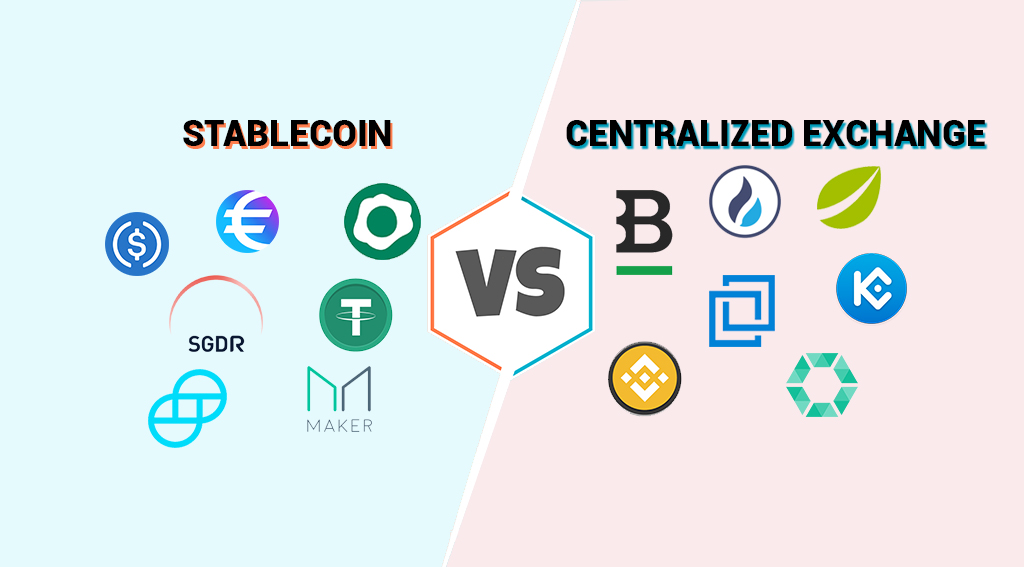
    The stablecoin market is obviously gaining popularity, growing from 1% of all crypto in 2018 to almost 3% today. Global stablecoin trading volume increased from $12.5 billion in 2017 to $82 billion in 2018, according to Chainalysis. Furthermore, the 24-hour trading volume for Tether, one of the most popular stablecoins, recently exceeded Bitcoin’s.

    Josh Goodbody
    Josh Goodbody

    But it’s a slow and complex process for large centralized exchanges to adopt this kind of currency. They already have the option to use Tether, and in the absence of user demand, they see no reason to list alternatives.

    Today we’re discussing these issues and trends with Josh Goodbody, Chief Counsel for Equilibrium, the framework behind the EOSDT stablecoin, and the Head of Europe and the Americas for Huobi Global’s sales and institutional business.

    Bottomline
    Why do you believe that large EOS holders would be interested in an EOS-based stablecoin when EOS’s volatility is a source of their income?

    Some exchanges obviously hold their users’ EOS, and they effectively become large block producers by virtue of holding lots of aggregated EOS on behalf of their clients. If you’re inherently bullish on EOS and believe there will be positive price movement in the future, you want to retain your exposure to that positive price movement. But you might also want to find a way to use your existing EOS holdings to create value without necessarily spending it.

    Equilibrium lets crypto users — especially those with large EOS holdings — stake that EOS in Equilibrium’s smart contract and create a stable source of volatility-neutral assets. Practically, this enables them to carry on with business while hedging market risk. If they’re very bullish, it might allow them to purchase more EOS cryptocurrency, but it still preserves their individual holding — they don’t have to cash out to create another crypto position. There are a number of dynamics within that that make large EOS holders very receptive candidates to creating EOSDT stablecoins.

    Equilibrium also recently merged the interests of EOS miners and EOS holders via integration with the REX project, an extremely popular market due to its passive income stream. As a result, Equilibrium can now offer an above-industry-rate return to users who choose to leverage their EOS holdings by generating EOSDT. They basically lend it to the system to earn fees on those deposits as other users borrow EOS in the form of CPU/NET resources. This opportunity is combined with the ability to generate EOSDT stablecoins at just 1% APR.

    Some crypto-markets proudly wear their crypto-anarchy colors, but the biggest stable coin in the world is pegged to the US dollar. Doesn’t that prove that the US dominates the crypto-economy, just as it dominates all other aspects of economic life around the world? What kind of future do other stablecoins have if this is the reality?

    The reality here is that the US dollar, and any activity related to it, has to inherently use the US dollar financial infrastructure. I’m of course referring to entire financial infrastructure that underpins the global economy. USD is a reserve currency for many countries, and it’s an established universal currency that many jurisdictions use for international trade. This is simply because the dollar is more stable than most other assets.

    Tether (USDT) is of course pegged to the dollar but, when used as a method of exchange, it doesn’t inherently involve US Dollar banking infrastructure. You can use Tether outside the confines of the traditional banking. It’s unfair to attribute this to purported US economic dominance — it just makes sense that the most widely used asset in the stablecoin space would happen to be pegged to the dollar. I don’t think this proves the US is dominating the crypto economy. Tether merely reflects the reality that the global economy still sees the value and stability of the US dollar as a sensible source of value for transactions.

    We have seen stablecoins pegged to other fiat currencies, and I think we’re seeing a slow but steady increase in diversification. Of course, there will be a question as to what happens when people wish to cash out of a stablecoin holding, but this practical concern doesn’t detract from the utility of these assets as a means of transferring value.

    Do you think that consumers have enough influence to drive mass adoption of stablecoins by major exchanges? What other cryptocurrency-using demographics can influence exchanges’ decision-making, and what are you doing to target these groups?

    User adoption is a key part of the strategy. Although crypto exchanges are receptive to stablecoins (and we’ve seen a large trend of adoption by exchanges) I think exchanges are identifying that there is value for themselves and their users alike by increasing the selection of stable assets that they support. Users can vote with their feet — if they can’t get what they’re looking for from one source, they’ll go to another. Smart exchanges understand that the user always comes first.

    As this mantra applies to Equilibrium, we are creating a framework that’s efficient and user-friendly from day one. It will be multi-asset compatible — the first build supports EOS itself as the underlying collateral for the Equilibrium framework, but this framework was always envisioned to be blockchain-interoperable. That’s to ensure we’re accessible to the widest array of communities using crypto-assets. We are going to start talking about the fact that Equilibrium is decentralized, as this is viewed by our users as massively positive. Furthermore, we’ve had feedback that the interest rate applicable to EOSDT production is extremely favorable. Everything we’re doing is to put the users first.

    It seems impossible to discuss regulation until we clearly nail down the characteristics of stablecoins. Do you agree? If not, what do you perceive as the main issue in stablecoin regulation?

    There has been a lot of work done by bodies like Global Digital Finance (GDF) to help define and create a common understanding for different asset types, and stablecoins are just one asset class that deserves such attention. These efforts are undoubtedly helpful, but unfortunately it ultimately comes down to the applicable law of individual jurisdictions — each has its own (often diverging) approach to stablecoins, which makes the stablecoin market rather challenging.

    So what is a stablecoin? By default, it’s an asset that’s shielded from market volatility. Its day-to-day value should be as stable as possible. A great way to accomplish this is to peg it to a stable fiat currency like the dollar or the euro. Some are fiat-backed, some are crypto-backed, and others are algorithmically backed. Each asset requires a case-by-case analysis to see where they match up with existing regulatory frameworks.

    The first iteration of stablecoins were very much fiat-backed. One dollar is one dollar of value out. That’s akin in most jurisdictions to the issuance of electronic money. I think that’s unfairly characterized a lot of other stablecoins as electronic money — in other words, as regulated instruments — when in many other cases they can, and should be, treated as crypto assets.

    Half of the trading volume on most crypto-exchanges comes from Bitcoin. Tether is in a class of its own when it comes to stablecoins — it has a $4 billion market cap and $17 billion in daily trading volume, but this is where the similarities end. Bitcoin reflects an unregulated, global economy while USDT reflects USD as a global currency. So which economy are the rest of stablecoins pegged to? Which approach is more viable?

    Large stablecoins like Tether are very much not pegged to an economy, but to an economic value. That’s an important differentiation to make here. The fact that an asset has been associated with a fiat currency is very different from it being attached to a jurisdiction’s economic performance. In this sense, I think the best way to look at stablecoins are that they have an inherent utility — they’re a volatility-neutral source of value. This is extremely important when it comes to cashing out of crypto positions, hedging activity, and day-to-day transactions via blockchain networks. They’re just as important as the volatile crypto assets they trade against.

    Stablecoins are a product of need — volatility-neutral assets are to be used in tandem with assets that are inherently volatile. The idea that we can eliminate fiat is perhaps wildly overambitious, and it doesn’t reflect the reality of the world economy. But stablecoins hold an increasingly important place in the world economy because the exchange environment wouldn’t work without these assets shielding their users from everyday volatility.

    Sponsored ReportThe Payments Intelligence GapRead
    Share. Facebook LinkedIn Twitter Telegram Copy Link Email

    Author

    fintech switzerland
    Fintechnews Switzerland
    • Facebook
    • X (Twitter)

    Related Posts

    Tether Backs SCRYPT as It Expands into Stablecoin Payments

    November 20, 2026

    Lauren Boyman Joins Broadridge from KPMG as Marketing Chief

    November 19, 2026

    AMINA Bank Staking Expands to 10 Assets with SUI and NEAR

    November 19, 2026

    Beacon Bank Taps Finastra to Simplify Payments After Its Merger

    November 17, 2026

    Swiss Banking Trade Association Calls for Regulatory Push on Domestic Stablecoins

    November 17, 2026

    Wealthsimple Offers Tetra’s CADD to Beta Clients

    November 16, 2026

    Wise Expands into US Investing via Its Broker-Dealer Licence

    November 16, 2026

    Anchorage Digital and Visa Add USDPT as a Settlement Option

    November 13, 2026
    AI Sponsored

    81% of Financial Firms Use AI. Only 14% Call It Transformational

    October 21, 2026
    Fintech Newsletter
    Subscribe to the most important Fintech Switzerland News
    Follow Us
    • Facebook
    • X / Twitter
    • LinkedIn
    • Instagram
    Swiss Fintech Startup Directory

    Swiss Fintech Startup Directory

    Top Swiss Fintech Startups

    Top Fintech Startups in Switzerland for 2026

    Upcoming Fintech Events
    Country
    AI & Big Data Expo Global 2027
    February 3, 2027
    -
    February 4, 2027
    United Kingdom
    -
    London
    Digital Finance Summit 2026
    December 3, 2026
    Belgium
    -
    Brussels
    Digital Society 2026
    November 25, 2026
    Germany
    -
    Frankfurt am Main
    FIBE Berlin 2027
    April 7, 2027
    -
    April 8, 2027
    Germany
    -
    Berlin
    FINANZ 2027
    March 17, 2027
    -
    March 18, 2027
    Switzerland
    -
    Zurich
    Promote Event View More
    Whitepapers & E-Books
    The Future of Competitive Advantage in Banking & Payments
    The Future of Competitive Advantage in Banking & Payments
    Bottomline
    American Newsletter

    Fintech News America

    Australia Fintech Map

    Australia Fintech Map

    Philippines Fintech Report

    SINGAPORE FINTECH REPORT

    Singapore Fintech Map 2025

    Indonesia Fintech Report

    Indonesia Fintech Map 2025 banner

    UAE Fintech Report

    UAE Fintech Report 2024

    Free Business Accounts

    Navigation
    • About Fintech News Network
    • FNN Media Kit
    • Work With Us
    • Contact Us
    • Fintech Switzerland Newsletter
    • Submit Press Release
    • Submit Fintech Startup
    • Datenschutzerklärung / Impressum
    Other Fintech News Network Publications
    Fintech News Switzerland
    Fintech News Singapore
    Fintech News Malaysia
    Fintech News Hong Kong
    Fintech News Philippines
    Fintech News Network Indonesia
    Fintech News Network Australia
    Fintech News Baltic
    Fintech News Nordics
    Fintech News America
    Fintech News UAE
    Fintech News Africa
    Get Informed

    Subscribe to Updates

    Subscribe to the most important Fintech Switzerland News

    Facebook LinkedIn X (Twitter) Instagram RSS
    • About Fintech News Network
    • FNN Media Kit
    • Work With Us
    • Contact Us
    • Fintech Switzerland Newsletter
    • Submit Press Release
    • Submit Fintech Startup
    • Datenschutzerklärung / Impressum
    © 2015 - 2026 Copyright CK Finanzpro GmbH. All Rights reserved.

    Type above and press Enter to search. Press Esc to cancel.

    Fintech Schweiz Digital Finance News - FintechNewsCH
    Manage Consent

    Your Privacy Matters to Us

    To provide the best experiences, we use technologies like cookies to store and/or access device information. Consenting to these technologies will allow us to process data such as browsing behavior or unique IDs on this site. Not consenting or withdrawing consent, may adversely affect certain features and functions.

    Functional Always active
    The technical storage or access is strictly necessary for the legitimate purpose of enabling the use of a specific service explicitly requested by the subscriber or user, or for the sole purpose of carrying out the transmission of a communication over an electronic communications network.
    Preferences
    The technical storage or access is necessary for the legitimate purpose of storing preferences that are not requested by the subscriber or user.
    Statistics
    The technical storage or access that is used exclusively for statistical purposes. The technical storage or access that is used exclusively for anonymous statistical purposes. Without a subpoena, voluntary compliance on the part of your Internet Service Provider, or additional records from a third party, information stored or retrieved for this purpose alone cannot usually be used to identify you.
    Marketing
    The technical storage or access is required to create user profiles to send advertising, or to track the user on a website or across several websites for similar marketing purposes.
    • Manage options
    • Manage services
    • Manage {vendor_count} vendors
    • Read more about these purposes
    View preferences
    • {title}
    • {title}
    • {title}