
Money20/20 Europe returned to the Netherlands from June 02 to 04, 2026, drawing a reported 7,600 attendees from more than 100 countries and 2,000 companies to explore the age of agentic AI, the rise of stablecoin-driven infrastructure, and the rapid policy changes creating new competitive frontiers for the fintech industry.
Like previous editions, the event saw several corporations, startups and public agencies announce their latest initiatives, leveraging the visibility, audience, and media coverage provided by the large-scale gathering to gain maximum exposure and garner interest from key stakeholders.
The following are the key announcements and news unveiled at Money20/20 Europe 2026, covering new stablecoin launches, global expansion plans, and strategic partnerships spanning AI agents, international trade, and open banking.

Kraken eyes global expansion
On Day 1, a keynote discussion between Scarlett Sieber, chief strategy and growth officer at Money20/20, and Arjun Sethi, co-CEO of digital asset exchange Kraken and its parent company Payward, recapped recent headlines involving the crypto exchange. These included its string of agreed acquisitions, such as US digital asset derivatives exchange Bitnomial and stablecoin and payments infrastructure provider Reap.
Sethi also shared plans for future acquisitions to broaden the platform’s capabilities with spot, margin, and US perpetual futures trading methods.
Though Payward filed for a national trust bank license in the US in May 2026, Sethi said the holding company is also actively seeking to extend operations to Southeast Asia, Africa, and Latin America, “either through buying existing business and shaking it up, or build from scratch”.
Qivalis BV unveils EUR stablecoin plans
On Day 2, the “Can Europe Build Its Own Stablecoin Champion?” fireside chat featured Jan-Oliver Sell, CEO of Qivalis BV, and moderator Anna Irrera, senior editor at Bloomberg News.
The session discussed geopolitical sovereignty in the age of stablecoins, noting that the current market is dominated by US dollar-denominated stablecoins, which account for approximately 99% of global volume. This dominance creates structural dependency for Europe.
To counter this, Qivalis BV, an electronic money institution backed by a consortium of 37 banks across 15 countries, is applying for a license in the Netherlands to issue a euro stablecoin under the EU’s Markets in Crypto Assets (MiCA) framework, targeting international business-to-business (B2B) use cases.
Sell argued that without a liquid, on-chain euro asset, European banks managing blockchain processes are forced to use the USD, introducing FX hedging costs and sovereign risk. In a volatile geopolitical environment, ceding this space to the dollar is deemed unwise.
Qivalis BV plans to operate as an open infrastructure layer where licensed intermediaries handle the minting and burning of tokens, ensuring sufficient volume for large-scale corporate settlements while adhering to regulatory standards.
Expanding the stablecoin landscape
Other players also announced initiatives to broaden access to fiat currency-based digital assets globally.
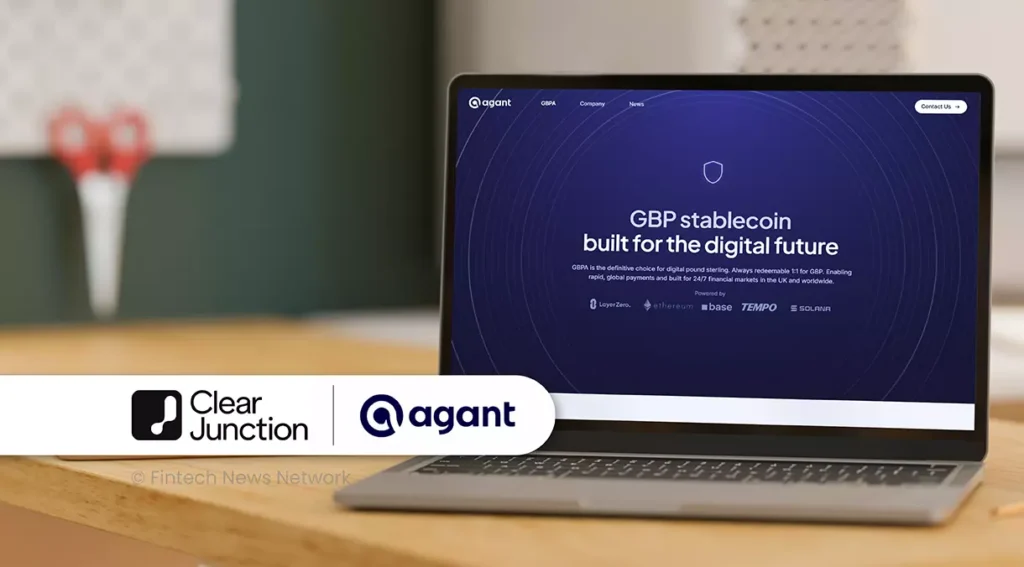
Clear Junction Group, a global payments infrastructure provider serving financial institutions and cryptoasset businesses, announced a partnership with stablecoin issuer Agant to support institutional access to GBPA, Agant’s Pound sterling stablecoin. The proposition is designed to support practical use cases across domestic and cross-border payments, settlement, corporate treasury, foreign exchange (FX) and exchange liquidity.
Under the agreement, Clear Junction Digital will support access to GBPA for eligible institutional financial services and cryptoasset businesses that meet the required onboarding and compliance requirements, acting as a distribution partner for GBPA.
Separately, MoneyGram announced the launch of MGUSD, a native USD stablecoin intended to serve as the foundation for the company’s growing suite of financial services. MGUSD will be integrated directly into the MoneyGram app in a self-custodial wallet to give customers a stable, USD-denominated balance. The launch targets the US market initially, but plans are in place to scale globally.
MoneyGram’s MGUSD relies on a collaboration of partnerships: Bridge, a Stripe company, is the regulated issuer; MGUSD tokens are minted and burned using M0’s smart contract infrastructure and deployed on the Stellar blockchain at launch; and MoneyGram holds MGUSD in Fireblocks wallets, which are used to send to individual customer wallets embedded in the MoneyGram app.
Enhancing cross-border payments
In a bid to streamline international trade, XTransfer, a B2B cross-border trade payment platform, and Societe Generale, a leading European bank, signed a Memorandum of Understanding (MOU). The partnership aims to enhance cross-border payment infrastructure and develop integrated financial solutions that support global trade flows.
Under the MOU, the parties will explore the development of integrated cross-border financial solutions. This includes developing local collection and outbound payment solutions that help suppliers collect from overseas buyers more efficiently and reliably, while enabling global importers to pay suppliers worldwide with greater speed, security and end-to-end operational certainty.
The cooperation also includes “Pay to China” services with USD and CNY settlement and transfer services in Hong Kong SAR and Mainland China. Furthermore, the parties will explore FX solutions to enable fast and reliable conversion of local currencies into major FX currencies such as USD and EUR, supporting smoother settlement and greater certainty for cross-border traders.
A new open banking payment scheme in the UK
Parallel to these initiatives, the UK is setting a new standard for domestic and automated payments with the launch of a scheme by the UK Payments Initiative Ltd (UKPI). Developed collaboratively with banks and fintech companies, UKPI’s scheme establishes a shared rulebook, commercial model and operational standards for flexible, automated, or recurring account-to-account payments, powered by open banking.
It aims to reduce the UK’s dependence on the card networks of Visa and Mastercard. By enabling consumers to authorize recurring and variable payments directly from their bank accounts, the initiative aims to bypass the need for payments to be routed through card schemes. It also aligns with the ambitions set out in the UK Government’s National Payments Vision by enabling new use cases for open banking payments at scale.
Initially, these payments will cover payments to the government, utilities, charities, financial services, and more.
Founding industry shareholders of UKPO include Barclays, HSBC UK, Lloyds Banking Group, NatWest, Santander, Monzo, Revolut, Starling, Token.io, and TrueLayer.
Agentic AI in payments
Another key theme during this year’s Money20/20 Europe event was agentic AI. Moving beyond theoretical experimentation, Worldline, a European payment specialist, and ING, a financial institution, announced the successful execution of Europe’s first end-to-end agentic payment transaction in production with Mastercard.
Completed between an ING cardholder and a merchant in the Netherlands, the solution operated on the same underlying infrastructure across Belgium and ran across Mastercard network, utilizing secure authentication and authorization mechanisms from all parties. It represents a milestone, proving that payments initiated and authenticated by merchant AI agents can function seamlessly across multiple European markets.
Separately, Experian announced the launch of its Agent Operating System, an agentic AI layer within the Experian Ascend Platform designed to help financial services organizations scale agentic AI. The system enables AI agents from Experian, clients and partners to work together through a common trust, semantic and orchestration layer, supported by clear controls, auditability and human oversight.
The Agent Operating System will be available to early adopters later this year, before rolling out to more than 2,300 client solutions globally.
Policy 20 forum
At the Policy 20 forum on June 02, senior policymakers, regulators, central banks, supervisors, and industry leaders convened to address one of the defining challenges facing financial services: the cross-border implications of diverging policies, implementation, and technological momentum.
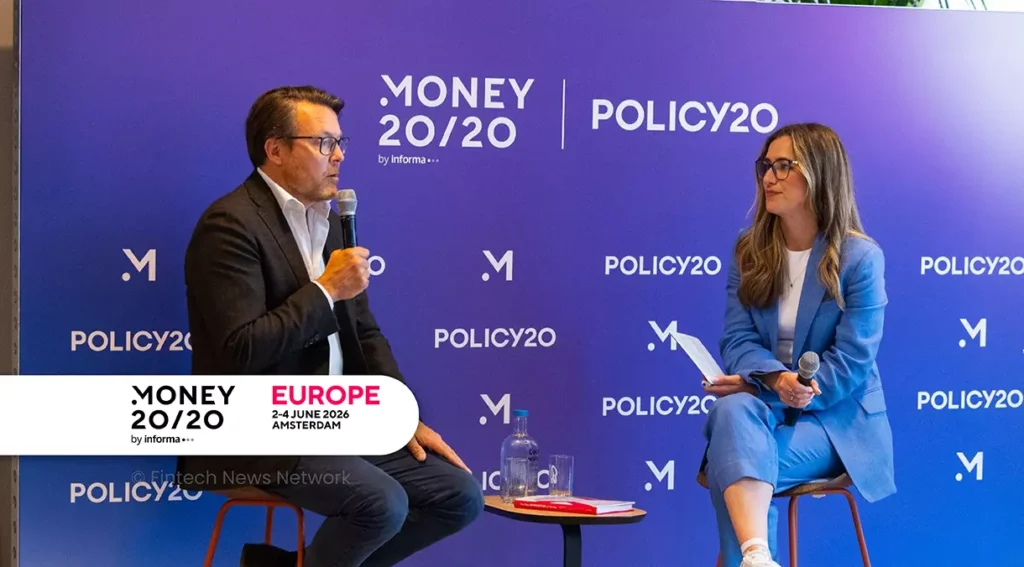
The invitation-only program brought together more than 40 leaders to explore how greater cooperation can support innovation, resilience and trust across an increasingly interconnected financial ecosystem.
Participants acknowledged that technology is no longer the primary barrier, as faster, cheaper, and more efficient solutions already exist. Consequently, the challenge now lies in ensuring innovation scales through interoperable frameworks, supportive regulation, and practical implementation.
Consensus also emerged that trust remains the foundation of cross-border finance, with agreement that trust between institutions, jurisdictions, and consumers is essential to enabling adoption and growth across payments, digital identity, AI, and digital assets.
Finally, attendees determined that reducing fragmentation will be critical to future progress. While complete global harmonisation may be unrealistic, greater coordination between regulators, policymakers and industry will be needed to support resilient and interoperable financial systems.
6 fintech startups spotlighted
On June 03, the 2026 Start-Up Media Session highlighted six fintech startups representing breakthrough innovation across AI-native finance, fraud prevention, digital assets, trust infrastructure, and modular banking technology.
These ventures were showcased as part of Money20/20 Europe’s broader Startup Hub, a platform designed to help early- and growth-stage companies gain visibility, forge connections, and accelerate scaling. The hub also hosted the industry-leading Start-Up Pitch Competition where emerging companies competed for recognition on one of fintech’s most influential stages.
This year’s Startup Pitch Winner, Aviel Intelligence, is a UK-based anti-scam intelligence company that identifies and engages with active scammers at scale. This live feed of intelligence is used by major banks and payment service providers (PSPs) to both minimise mule risk and protect customers from sending money to scammers.
The remaining startups showcased were:
- Fraudio, which provides AI-powered fraud detection and risk intelligence for the payments ecosystem, helping PSPs, acquirers, and issuers identify and prevent fraud across every stage of the transaction lifecycle;
- Vouchsafe, an AI-era anti-fraud infrastructure that makes it safer and easier for businesses to trust their customers, and vice versa;
- SoftBees, a Ukrainian-Polish fintech company helping banks and financial institutions launch digital banking products across different markets with a significantly shorter time-to-market;
- Sapi, which provides payment-linked financing for small businesses, working in partnership with payment companies to provide working capital directly via their existing payment relationships; and
- Serene, a behavioral intelligence platform that helps financial institutions identify customers at risk of financial distress, vulnerability, fraud and poor outcomes earlier than traditional approaches.
Featured image: Edited by Fintech News Switzerland, based on image by Money20/20