


Close Menu
    • Top Fintech Startups in Switzerland
    • Switzerland Fintech Startup List
    • Virtual Banking
    • Open Banking
    • Online Mortgage
    • Regtech
    • Fintech Events
    • Submit Press Release
    • Submit Startup
    Facebook LinkedIn X (Twitter) Instagram RSS
    • About Fintech News Network
    • Media Kit
    • Contact Us
    • Work With Us
    • Newsletter
    • Submit Press Release
    • Submit Startup
    • Impressum
    Fintech Schweiz Digital Finance News – FintechNewsCH
    part of Fintech News Network

    Fintech News Network

    Facebook LinkedIn X (Twitter) Instagram RSS
    Free Newsletter
    • Blockchain
    • Wealthtech
    • Lending
    • Mobile Payments
    • Insurtech
    • PFM
    • AI
    • Funding
    • Various
      1. Germany
      2. London
      3. USA
      4. Austria
      5. Liechtenstein
      6. View All

      BaFin Fines Deutsche Bank €8 Million Over Postbank Migration Issues

      November 13, 2026

      Affirm Acquires Ratepay as Nexi Focuses on Core Activities

      November 10, 2026

      Eurex Clearing to Handle Digital and Traditional Assets Together

      November 4, 2026

      Deutsche Börse Extends Access to DAX 40 Stocks Beyond Xetra Hours

      October 28, 2026

      Payhawk Reaches US$2 Billion Valuation in Goldman Sachs-Led Series C

      November 20, 2026

      Griffin Raises US$20M to Add Card and Stablecoin Services

      November 13, 2026

      HSBC UK Launches Stripe-Powered Tap to Pay for Small Businesses

      November 12, 2026

      UBS Job Cuts Hit London as Credit Suisse Integration Enters Final Phase

      November 6, 2026

      Lauren Boyman Joins Broadridge from KPMG as Marketing Chief

      November 19, 2026

      Beacon Bank Taps Finastra to Simplify Payments After Its Merger

      November 17, 2026

      Wise Expands into US Investing via Its Broker-Dealer Licence

      November 16, 2026

      Anchorage Digital and Visa Add USDPT as a Settlement Option

      November 13, 2026

      Revolut Austria Banking Branch to Launch in 2027 With Local IBANs

      November 5, 2026

      BingX EU Secures MiCA Licence for Crypto Services in Europe

      October 15, 2026

      Bitget Pauses Withdrawals Following US$351.6M Hot Wallet Hack

      September 25, 2026

      Bybit Payments Secures Austria EMI License for European Payment Services

      August 5, 2026

      Swiss and Liechtenstein Banks Resist Core Banking System Overhaul

      November 11, 2026

      Swiss Blockchain Survey 2026: Banks on Stablecoins and Tokenized Funds

      October 20, 2026

      Bank Frick Enables Real-Time Euro Transfers and CHF Payment Receipts

      July 21, 2026

      Celsion Bank Begins Operations, Combining Digital Assets and Traditional Banking

      April 10, 2026

      Lauren Boyman Joins Broadridge from KPMG as Marketing Chief

      November 19, 2026

      Top Finfluencers in Switzerland in 2026

      November 10, 2026

      88% of Tech Founders Walk Away with Zero Exit Value

      November 9, 2026

      MUFG Bank Europe Absorbs Securities Arm to Become EU Universal Bank

      November 4, 2026
    • More
      • Fintech Events
      • Top Swiss Fintechs in 2026
      • Swiss Fintech Startup List
      • Accelerators
    Fintech Schweiz Digital Finance News – FintechNewsCH

    Fintech News Network

    Home»Blockchain»Modernizing Bank Settlements with Blockchain
    Blockchain

    Modernizing Bank Settlements with Blockchain

    Blockchain offers the real-time settlement capabilities needed to replace banks’ inefficient legacy infrastructure, a new paper by Roland Berger says.
    Fintechnews SwitzerlandFintechnews SwitzerlandJune 22, 20266 Mins Read
    LinkedIn Facebook Twitter Telegram Copy Link Email
    Modernizing Bank Settlements with Blockchain
    Share
    Facebook Twitter LinkedIn Telegram Copy Link Email
    Free Newsletter

    Get the hottest Fintech Switzerland News once a month in your Inbox

    While today’s banking system presents itself as fully digital, the core settlement architecture remains rooted in systems designed decades ago.

    This infrastructure pose significant challenges as it is often built around fragmented legacy systems that are expensive to maintain, difficult to integrate with modern technologies, and slow to adapt to new regulations or products.

    Against this backdrop, blockchain technology represents a viable solution for upgrading this infrastructure, offering shared-ledger settlement in real time at costs and speeds suitable for production volumes, and providing the structural overhaul that banking infrastructure requires, according to a new report by management consulting firm Roland Berger.

    Bottomline

    The paper notes that while many banks have already begun experimenting with blockchain, most activity remains confined to pilots and token gestures. The strategic challenge is therefore to move beyond experimentation while remaining compliant and managing risk.

    It outlines four steps to meet this challenge. First, banks must quantify the greatest sources of financial drain, customer friction or risk of inaction, and isolate one or two high-impact business cases. Then, they can develop a strategy that concentrates resources where there is a clear return on investment, avoiding engaging in initiatives that lack measurable return.

    Second, banks need to establish a dedicated digital assets team to bridge technology, finance and compliance. This team will be in charge of developing the strategy and implementation roadmap. It will require top-level sponsorship as digital asset programs are frequently met with skepticism across established banking structures, hence, clear executives backing is key to reduce internal resistance and signal institutional commitment.

    The third step involves translating prioritized pain points into a well-defined pilot. This pilot should be contained, for example, within a specific currency corridor or product line, and supported by clearly defined success metrics. A key decision at this stage will be whether to build a proprietary solution or participate in an existing blockchain consortium.

    Finally, the fourth and last step involves choosing the right blockchain based on alignment between the technology architecture and the operational and regulatory context in which it will be deployed.

    While public networks like Ethereum offer transparency, liquidity, and access to a broad developer ecosystem, banks’ privacy and compliance obligations may make private or permissioned configurations more appropriate. Often, a multi-chain approach proves the most relevant.

    Inefficiencies in current banking infrastructure

    Despite improvements on mobile apps and digital channels, the core infrastructure of banking still runs on settlement architecture designed in previous decades. This legacy infrastructure is plagued with inefficiencies that are embedded in interbranch settlement, interbank flows, cross-border transfers and operational areas such as lending and trade finance.

    Settlement processes still depend on reconciliation cycles and operating-hour limitations. Furthermore, large back-office teams continue to reconcile transactions manually, with one study indicating that 0.8-1.8% of these accounts are subject to error. These manual processes not only introduce delays and capital drag but also create a significant vulnerability to mistakes.

    Cross-border transfers show a similar pattern. These payments are routed through intermediary and correspondent banks operating across different time zones and regulatory regimes, with each intermediary performing compliance checks before funds reach their destination, causing settlement times to range from a number of hours to several days. This accumulates fees along the chain, and introduces opacity throughout the journey.

    Loan servicing is also plagued with timing gaps. Loan systems frequently rely on asynchronous updates across departments, creating temporary mismatches and limits responsiveness.

    Escrow processes likewise rely on legacy infrastructure and time-consuming manual verification, with buyers and financial institutions maintaining separate records across independent systems. Verifying contractual milestones typically requires documentation exchange before funds are released, extending closing processes to as much as 30-45 days.

    Similarly, trade finance remains heavily manual and document-driven. Transactions involve exporters, importers and banks that operate distinct record-keeping and compliance systems. These systems are rarely integrated, with verification requiring repeated document checks before capital can move.

    The potential of blockchain

    Blockchains are decentralized ledgers that allow transactions to be recorded, verified and synchronized across participants without requiring a central intermediary to reconcile accounts after the fact. This presents a fundamentally different operating model to a traditional bank core settlement architecture which uses centralized databases and trusted internal systems to process, reconcile, and finalize transactions.

    For interbranch settlements, a bank could deploy a private blockchain network in which each branch operates as a node with read and write access. When a customer at one branch withdraws funds deposited at another, the transaction is recorded on a shared ledger and becomes immediately visible across the network, with balances updating simultaneously.

    Major financial institutions are implementing tokenized deposits that enable immediate fund transfers across branches while reducing internal settlement friction. JP Morgan, for example, offers the Kinexys suite of blockchain services for moving money, tokenizing assets and exchanging financial information. JP Morgan is also part of the Canton Network alongside institutions like Goldman Sachs, HSBC, and BNY. The Canton Network is a blockchain network for regulated financial markets launched in 2023.

    In interbank settlements, instead of routing transactions through correspondent chains or relying on end-of-day netting, banks participating in a blockchain network can record obligations on a consortium platform accessible to authorized members. This blockchain layer would sit above existing core systems and connect through APIs, allowing synchronization without requiring a wholesale replacement of legacy infrastructure.

    This approach has already been tested through initiatives like the Monetary Authority of Singapore’s Project Ubin, which explored distributed ledger technology (DLT) for real-time gross settlement systems for interbank payments and securities settlement.

    A shared blockchain ledger can also function as a single source of truth for loan data. When a borrower makes a payment, the update is recorded once and reflected immediately across relevant departments.

    Versana illustrates this model in syndicated lending. The platform, which is backed by major banks, provides real-time visibility into loan positions, repayments and accruals for participating lenders.

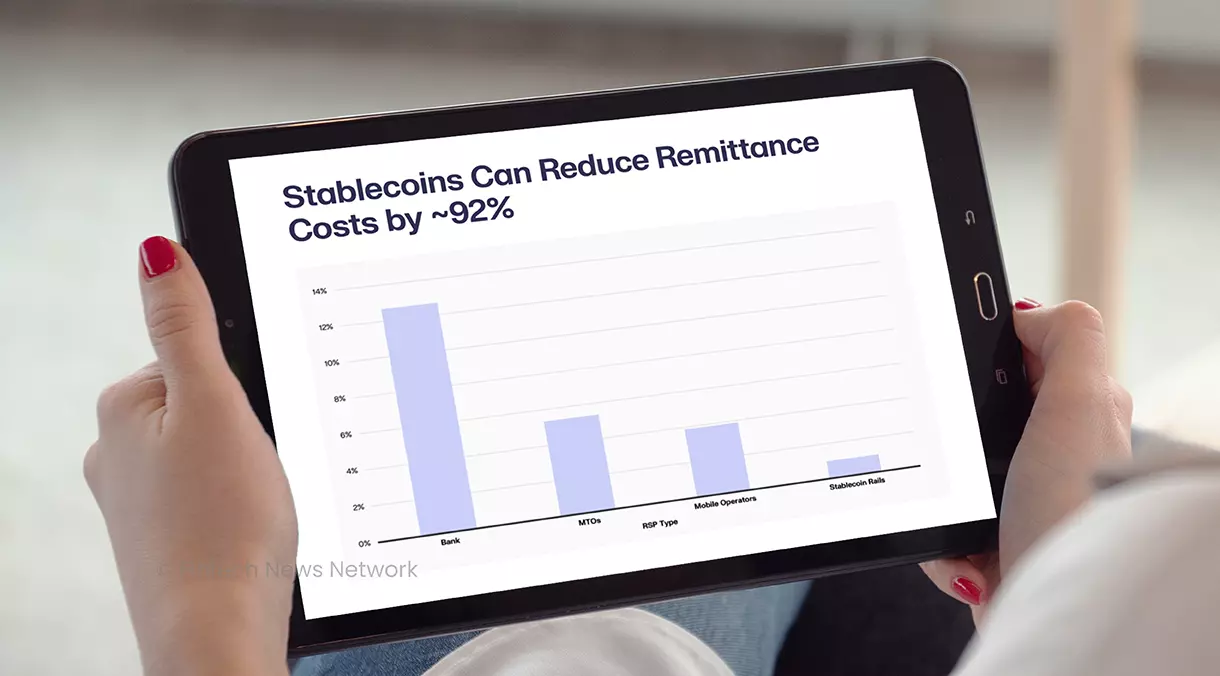
    Cross-border transfers are another area particularly suited to shared ledger settlement. Instead of moving through multiple intermediaries, transactions can be recorded directly on blockchain infrastructure between participating institutions, reducing reliance on correspondent chains, improving speed, and ultimately cutting costs. According to an analysis by cryptocurrency investment group Keyrock, stablecoins can reduce remittances fees by 92%.

    Fee comparison by provider type for a US$200 transfer, Source: Keyrock
    Fee comparison by provider type for a US$200 transfer, Source: Keyrock

    Finally, trade finance and escrow arrangements can benefit significantly from blockchain technology. Platforms can digitalize trade documentation and store it on a shared ledger that is accessible to authorized participants. Smart contracts, meanwhile, automate verification by checking whether predefined conditions are met before triggering payment.

    Similarly, escrow arrangements can be automated through smart contracts that hold funds on blockchain infrastructure and release payment once predefined conditions are verified. Rather than relying on manual confirmation by an escrow agent, execution is triggered automatically when an authoritative event is recorded.

    American startup Propy exemplifies this model, using blockchain to modernize how property is bought, sold, and transferred. The company claims its model reduces closing time from 30-45 days to as little as 24 hours in some cases.


    Featured image: Edited by Fintech News Swizterland, based on image by 21vectors via Magnific

    Sponsored ReportThe Payments Intelligence GapRead
    banking Distributed Ledger Technology (DLT) settlement infrastructure
    Share. Facebook LinkedIn Twitter Telegram Copy Link Email

    Author

    fintech switzerland
    Fintechnews Switzerland
    • Facebook
    • X (Twitter)

    Related Posts

    Tether Backs SCRYPT as It Expands into Stablecoin Payments

    November 20, 2026

    AMINA Bank Staking Expands to 10 Assets with SUI and NEAR

    November 19, 2026

    Swiss Banking Trade Association Calls for Regulatory Push on Domestic Stablecoins

    November 17, 2026

    Wealthsimple Offers Tetra’s CADD to Beta Clients

    November 16, 2026

    Anchorage Digital and Visa Add USDPT as a Settlement Option

    November 13, 2026

    Sygnum Fund Aims to Grow Investors’ ETH Beyond Staking

    November 13, 2026

    Swiss and Liechtenstein Banks Resist Core Banking System Overhaul

    November 11, 2026

    Morgan Stanley Eyes Tokenisation With Vinyl Equity Deal

    November 10, 2026
    AI Sponsored

    81% of Financial Firms Use AI. Only 14% Call It Transformational

    October 21, 2026
    Fintech Newsletter
    Subscribe to the most important Fintech Switzerland News
    Follow Us
    • Facebook
    • X / Twitter
    • LinkedIn
    • Instagram
    Swiss Fintech Startup Directory

    Swiss Fintech Startup Directory

    Top Swiss Fintech Startups

    Top Fintech Startups in Switzerland for 2026

    Upcoming Fintech Events
    Country
    AI & Big Data Expo Global 2027
    February 3, 2027
    -
    February 4, 2027
    United Kingdom
    -
    London
    Digital Finance Summit 2026
    December 3, 2026
    Belgium
    -
    Brussels
    Digital Society 2026
    November 25, 2026
    Germany
    -
    Frankfurt am Main
    FIBE Berlin 2027
    April 7, 2027
    -
    April 8, 2027
    Germany
    -
    Berlin
    FINANZ 2027
    March 17, 2027
    -
    March 18, 2027
    Switzerland
    -
    Zurich
    Promote Event View More
    Whitepapers & E-Books
    The Future of Competitive Advantage in Banking & Payments
    The Future of Competitive Advantage in Banking & Payments
    Bottomline
    American Newsletter

    Fintech News America

    Australia Fintech Map

    Australia Fintech Map

    Philippines Fintech Report

    SINGAPORE FINTECH REPORT

    Singapore Fintech Map 2025

    Indonesia Fintech Report

    Indonesia Fintech Map 2025 banner

    UAE Fintech Report

    UAE Fintech Report 2024

    Free Business Accounts

    Navigation
    • About Fintech News Network
    • FNN Media Kit
    • Work With Us
    • Contact Us
    • Fintech Switzerland Newsletter
    • Submit Press Release
    • Submit Fintech Startup
    • Datenschutzerklärung / Impressum
    Other Fintech News Network Publications
    Fintech News Switzerland
    Fintech News Singapore
    Fintech News Malaysia
    Fintech News Hong Kong
    Fintech News Philippines
    Fintech News Network Indonesia
    Fintech News Network Australia
    Fintech News Baltic
    Fintech News Nordics
    Fintech News America
    Fintech News UAE
    Fintech News Africa
    Get Informed

    Subscribe to Updates

    Subscribe to the most important Fintech Switzerland News

    Facebook LinkedIn X (Twitter) Instagram RSS
    • About Fintech News Network
    • FNN Media Kit
    • Work With Us
    • Contact Us
    • Fintech Switzerland Newsletter
    • Submit Press Release
    • Submit Fintech Startup
    • Datenschutzerklärung / Impressum
    © 2015 - 2026 Copyright CK Finanzpro GmbH. All Rights reserved.

    Type above and press Enter to search. Press Esc to cancel.

    Fintech Schweiz Digital Finance News - FintechNewsCH
    Manage Consent

    Your Privacy Matters to Us

    To provide the best experiences, we use technologies like cookies to store and/or access device information. Consenting to these technologies will allow us to process data such as browsing behavior or unique IDs on this site. Not consenting or withdrawing consent, may adversely affect certain features and functions.

    Functional Always active
    The technical storage or access is strictly necessary for the legitimate purpose of enabling the use of a specific service explicitly requested by the subscriber or user, or for the sole purpose of carrying out the transmission of a communication over an electronic communications network.
    Preferences
    The technical storage or access is necessary for the legitimate purpose of storing preferences that are not requested by the subscriber or user.
    Statistics
    The technical storage or access that is used exclusively for statistical purposes. The technical storage or access that is used exclusively for anonymous statistical purposes. Without a subpoena, voluntary compliance on the part of your Internet Service Provider, or additional records from a third party, information stored or retrieved for this purpose alone cannot usually be used to identify you.
    Marketing
    The technical storage or access is required to create user profiles to send advertising, or to track the user on a website or across several websites for similar marketing purposes.
    • Manage options
    • Manage services
    • Manage {vendor_count} vendors
    • Read more about these purposes
    View preferences
    • {title}
    • {title}
    • {title}