

Fintech News Switzerland (FNN) speaks with Michael Brüggler* to explore how up-and-coming startups can expertly navigate the complex Swiss fintech license regulatory landscape.
Michael is the managing expert at Fintech Werkstatt and was the FINMA license application manager for the new Swiss fintech startup MOGLI. He recently successfully obtained a Swiss fintech license for MOGLI in only 8 months. In this exclusive FNN interview , he walks us through the process.
FNN: Switzerland has issued only 3 fintech licenses so far to YAPEAL, Klarpay and MOGLI, what is the reasoning behind that?
Michael: FINMA had to evaluate many detailed legal questions in regard to this new approval category Art. 1b. To no surprise within the community many questions regarding the Decentralized Ledger Technology (DLT) needed to be evaluated. A lot of questions within the DLT where raised in regard to the legal handling of crypto tokens in all their various forms. What is allowed and what is not allowed. FINMA issued divers publication clarifying divers topics. The ICO Guidelines that FINMA issued of February 16, 2018 and the supplement to the guidelines for subordination inquiries regarding Initial Coin Offerings (ICOs) of September 11, 2019 comes to mind.

How should the tokens best be classified and defined to assure a high degree of legal certainty? The result is that according to the this guideline we have to distinguish between a payment token (crypto currency), an utility token and an asset token. The guideline and the supplement also defines the applicability of the respective law.
We are witnessing a sudden boom in fintech players serving Swiss SMEs in banking namely Klarpay, Mogli and Relio, who have yet to secure a license. Is there a reason for the sudden surge as it was a quiet space for the past few years?
Firstly we think many started about at the same time when this new category was passed and came into effect on the 1st January 2019. YAPEAL was the pioneer who had paved the way for the fintech industry. The experienced team around YAPEAL’s Co-Founder and CEO Thomas Hilgendorf did a particularly good job. Moreover, having a chairman such as Hans Kuhn, who worked for the Federal Office of Justice as well as the Swiss National Bank (SNB) for over 13 years surely helped to establish a proper application. When you have legal, compliance, AML and risk experts with decades of experience in the banking and payment industry, you don’t need much help with the application. We would also expect Relio to be able to secure their license soon based on their in-house competence.
Fintech Werkstatt has initiated a monthly ‘Fintech Alliance Talk’
Besides, I think the ability to raise seed money takes a lot of time in Switzerland. Most funds talk about their willingness to finance innovation but at the same time request these companies to have at least CHF 1-5 million in turnover. To build innovation i.e. something truly new, is contradictory with this requirement. In short, the innovation phase is often slowed down due to the founders’ minimal financial resources. Realistically you need much more of your own capital than the minimum required amount of CHF 300,000 or at least 3% of client deposits. For the fintech license, you would probably have to spend at least half of your equity and with the remaining funds you can’t realistically build or buy an e-wallet application. Besides, there are other costs required to build up your organisation. Startups should aim for a minimum of CHF 700,000 or more as you have to maintain half of your own capital at all times according to the Swiss Code of Obligation.
Fintech Werkstatt supports fintech startups in getting regulatory approval, for both the sandbox and fintech license. It also provides advisory and business services in areas such as company registration, financial budgeting and business planning.
Fintech Werkstatt has initiated a monthly ‘Fintech Alliance Talk’ with the CEOs’ of Saphirstein, MOGLI, YAPEAL and Klarpay to support Swiss fintechs in general. Relio’s CEO will be joining our next meeting as well. Taking into account the comments from fintech startups that have already gone through the application process gave us a comprehensive overview in regard to working with FINMA. We are confident that the applications will be processed more quickly now that more are coming in a ‘new normal’ will be established.
Traditional Swiss banks do not seem to care much about Swiss SMEs. Where do you see the potential?
Traditional banks might not see the symbiotic potential and their legacy IT system is also a limiting factor. Additionally, we think that many banks focus on other more lucrative earning streams and offering real-time payments linked to SME accounting is simply not their priority.
With PSD2 ‘à la cart’, Switzerland is missing out on many innovations that are currently taking place in Europe. I would not agree that the banks do not care, on the contrary, we see it with MOGLI where large banks are very much interested to work with them. For such a fintech, having a full technology stack of their own is not the limiting factor anymore. Some banks might view fintechs wrongfully as a threat rather than an opportunity which is regrettable.
Our client MOGLI, for example, showed us their rules-based platform called youONE. They claim that they can use their rule engine for all business logic and interfaces. Looking at its development, it seems realistic to us that they need only about 10% of the effort compared to other modern softwares based on the visual ‘drag&drop’ rules creation demo and their small staff size.
For larger SMEs, they provide custom solutions by adding some specific rules. Then on the mandateID of a request, the platform selects the correct rule at run time. Combined with their mature text understanding AI and big data capabilities, we were simply impressed at how innovative such a small startup can be.
This presents an opportunity for every bank, insurance and telecoms company or even the production industry. Currently rule-based programming is mainly used by Google and Microsoft. To have such an innovation here in Switzerland is amazing.
Which are the entities largely investing in Swiss fintech startups? Who are the investors of MOGLI and how was the fundraising process?
Fintech Werkstatt helps investors to find promising fintech investments and development partners while we aid innovative startups to find seed investors. It is a symbiotic win-win situation which we find fruitful.
As outlined earlier, banks, insurance and telecoms companies have some very good reasons to invest and work with innovative startup companies.
But while local potential investors have the tendency to ponder about traction and turnover, international investors are starting their due diligence and they are much faster at it. We have observed US and Chinese investors already completing their due diligence process for fintechs like MOGLI to position themselves to snap up this little Swiss pearl.
“If they do not already generate a turnover of at least 1 million Swiss francs, Swiss investors end to stay away”
To our understanding, investors might underestimate the potential of growth through innovation. In our opinion, these investments have a potential to grow more than 5 to 10 times within a few years. But you have to be able to balance between risk and innovation.
Even the ‘Swiss Enterpreneurs Foundation’, which was founded in December 2017 under the patronage of Federal Councilor Johann N. Schneider-Ammann, does not want to take the risk to invest in innovative startups if they do not already generate a turnover of at least 1 million Swiss francs. To what extent the classic financing of growth companies with a turnover of over CHF 1 million per year is promoting innovation remains unclear to us. Based on such requirements, these funds welcome the opportunity for established companies to obtain an attractive refinancing alternative rather than supporting innovation at its core.
We can’t see the point of how these investments are impacting innovation in a meaningful way. The Swiss Entrepreneurs Fund follows more or less the same investment criteria that Credit Suisse, UBS, Swisscom and MOBILIAR have used for a very long time in their own venture and entrepreneurs funds. To no one’s surprise, these very same institutes are on the Board of the Swiss Entrepreneurs Foundation. Federal funds that are administered the same way as countless venture funds that already exist are pointless or at least sadly miss the opportunity to support Swiss innovation in a meaningful way. The fact that the federal government has put the keys to manage innovation capital for the fintech industry in the hands of the banks and insurance companies is regrettable and a rather disturbing conflict of interest. Why should banks support innovative fintech companies with venture capital if they could potentially become a threat?
The consultation process around the new category Art. 1b, PSD2 for Open Banking or a simple account opening by a fintech company at a bank shows how ambivalent the relationship between banks and the fintech industry really is. We observe that innovation in Switzerland is to a large extent financed by the founders. A rather surprising paradox given all the political efforts and countless talks expressing the willingness to financially support innovation in Switzerland.
“Traditional banks’ legacy IT systems are unable to handle the evolution of Swiss SMEs”
We estimate that it takes about 5 years or even longer for an innovative startup to generate a steady turnover of over 1 million Swiss francs. An innovative startup that has been around for over 5 years can’t be deemed as new in this fast-moving industry. A different and more innovative approach would be more helpful and is necessary.
Perhaps investors, funds and banks should focus on assessing the potential, and risks of an innovative startup as well as the competence of the team. At the moment, fintech founders and many others take on all of the risks to work for the benefit of an entirely new economy. Should the worst happen, they not only lose their savings but will face great difficulties in getting paid by the Swiss unemployment insurance. This is a thorn that should be removed.
Seeing how money is being invested in Archegos and Greensill but not in Switzerland to nurture domestic innovations has raised questions. We have difficulties in fully understanding why the assessment of risk and potential comes to a halt when it comes to the turnover question. Our experts at Fintech Werkstatt have done their jobs in lining up potential investors from London, Palo Alto and Singapore for our hidden champions. We just have to accept that in Switzerland, once again foreign strategic investors are in the driving seat. These top Swiss innovators, jobs and taxes might leave through the same door as the financing is coming in.
How are SME payments traditionally handled in Switzerland and how are new fintechs able to disrupt or improve that?
Banks handle payments in quite a static and instructive way without being explanatory. Their legacy IT systems are unable to handle the evolution of SMEs’ needs or their accounting processes. The competence in handling the matter does not depend on the bank but on individual employees dealing with customers and therefore can be classified as mostly random.
The IT systems of the banks are a patchwork of databases. They are not up to the task for fully automated AI-based AML support or transactional risk assessment supported with automated semantic analysis and adverse media checking. This are areas where innovative startups will be able to handle and be a disruptive force especially when handling large volumes.
You mentioned MOGLI earlier, walk us through its journey from inception to present and what were the lessons learnt in their attempts to get a license.
To test within the sandbox, we filed an application at the Self Regulatory Organisation (SRO) VQF in October 2018 and got the approval in March 2019. In March 2020, the board mandated Fintech Werkstatt to prepare their FINMA Fintech license application which we sent in on August 2020. We received a deposition on the 1st August 2021 for our client.
In the sandbox, MOGLI was able to test its e-wallet in the market with clients. During this period, MOGLI found fraudulent attempts to use stolen credit card credentials. Some London-based criminals had loaded money with stolen credit card credentials to the app just to transfer it shortly after to another bank in order to avoid the freezing of their assets. The lesson learned was:
- Two factor identification helps but it does not provide absolute protection;
- The names on the credit cards are for decorative use only;
- If you have too many fraudulent attempts with your e-wallet, the acquirer will put your contract to an end and the money will be blocked for a long time without much explanation.
There are no passporting in the EU and a fintech in the sandbox has great difficulties to open an account with a bank or even a service provider due to this. The concept of SRO’s are basically unknown in the EU and therefore mostly disregarded. But even with a fintech license, it is challenging to open a correspondence bank account. If you are dealing with crypto currencies, it is close to impossible.
Taking the great expense into account, I think our client could not learn enough to justify the cost and administrative work for an SRO application, the audits and the onboarding of all the partners that you need to become operative. Still, it was a good experience in preparation for the fintech license.
What sets MOGLI apart from the other players out there and how have they set out to make a difference in terms of core banking?
MOGLI’s development team and their technology which focuses on creating value for SMEs, banks, insurance and telecoms companies sets them apart. They started with a first use case that happens to be payments with a focus on KMU. Then they went through the pain to develop their own stack which sets them apart by putting them into a position to match KMUs’ needs. Loyalty functions allows KMUs to tailor their marketing campaigns according their client’s needs and enable efficient up-selling. Connecting instant payments to instant accounting is another topic. But to see an entire trade finance platform built within only a few months is impressive.
“FINMA always promptly responds to calls and emails”
How does the Swiss fintech licensing process compare to that of our European or even Asian counterparts?
We have only a modest ability in making this comparison. We know of EU licenses that took over 12 months to be approved as the equity requirement is above € 1 million. This is where FINMA’s accessibility is outstanding as a government authority that clarifies any issues, and always promptly responds to calls and emails. This is rare and really sets the Swiss fintech licensing process apart.
Are there any areas of friction in the fintech licensing process that you foresee the need for Swiss regulators to smooth out?
With less than CHF 30,000, the FINMA’s application cost seems reasonable to us in regard to the MOGLI application. Considering the cash burn rate of a FinTech, each month is crucial and we hope that FINMA will be able to shorten the application process for a straightforward application in the future. From clients, the questions we received most were regarding minimum equity requirements, AML transaction supervision, budget and cross border activity/pass-porting. On the crypto side the question that the Financial Action Task Force (FATAF) and FINMA had to clarify was for example who, when and how one has to comply while transferring of virtual assets (VA). Also know as compliance with the ‚travel rule’ (FATF Recommendation 16 respectively Art. 10 of the AMLO-FINMA).
Another challenging question is related on how to ensure that the VAs are not related to illegal activity in the first place. To our understanding Switzerland does apply one of the stringent practices in this regard. We are therefore in the believe it is misleading when Switzerland is praised as ‚Crypto Eldorado‘ by political representatives and economic development associations even for unregulated wallets.
How is Fintech Werkstatt able to ease this licensing process for Swiss startups? Where can they find the information needed?
It is best if you have a quick look at our website for more information. Law and consulting companies’ services are rather expensive. However, if you compare the fees in Zurich with what you pay for a lawyer in London or worse in New York, you might be very happy with the fees in Switzerland.
Most importantly Fintech Werkstatt has the documents and experts to do the job successfully in the past which not many consulting or law firms can claim. But sure, with about 50% lower costs, we have some disruptive potential on the cost side. Fintech Werkstatt hands out a set of sample documents that you need for a FINMA application. Even if you establish all the documents yourself with the help of a consulting or law company, you may still end up paying more than this. But more importantly, when a client gives us the full mandate to manage their fintech applications, they also profit from our large network in the fintech industry.
We support our clients to set up a company, establish a financial budget and business plans, find technical partners for the onboarding or find a white label solution. We also help and advise with the setting up of a competent board, management as well as risk and compliance department. Fintech Werkstatt has no objective to be disruptive as there is no need for that. We are rather integrative, just extremely focused on one thing; to manage the FINMA fintech applications for our clients in order to reduce the time for market launch and the cost for our clients. With law and consulting firms, we work in a symbiotic way. Many of the lawyers and consultants that we work with are experts in a specific area or are audit companies that need to remain independent as future auditors for those fintech companies.
What final advice do you have for up-and-coming startups looking to secure a Swiss fintech license?
In short, our advice for startups or any other companies is to focus on their core business and competence. A FINMA fintech application is a one-off complex endeavor. Get help from experts whenever you have to perform a complex task outside of your core competence.
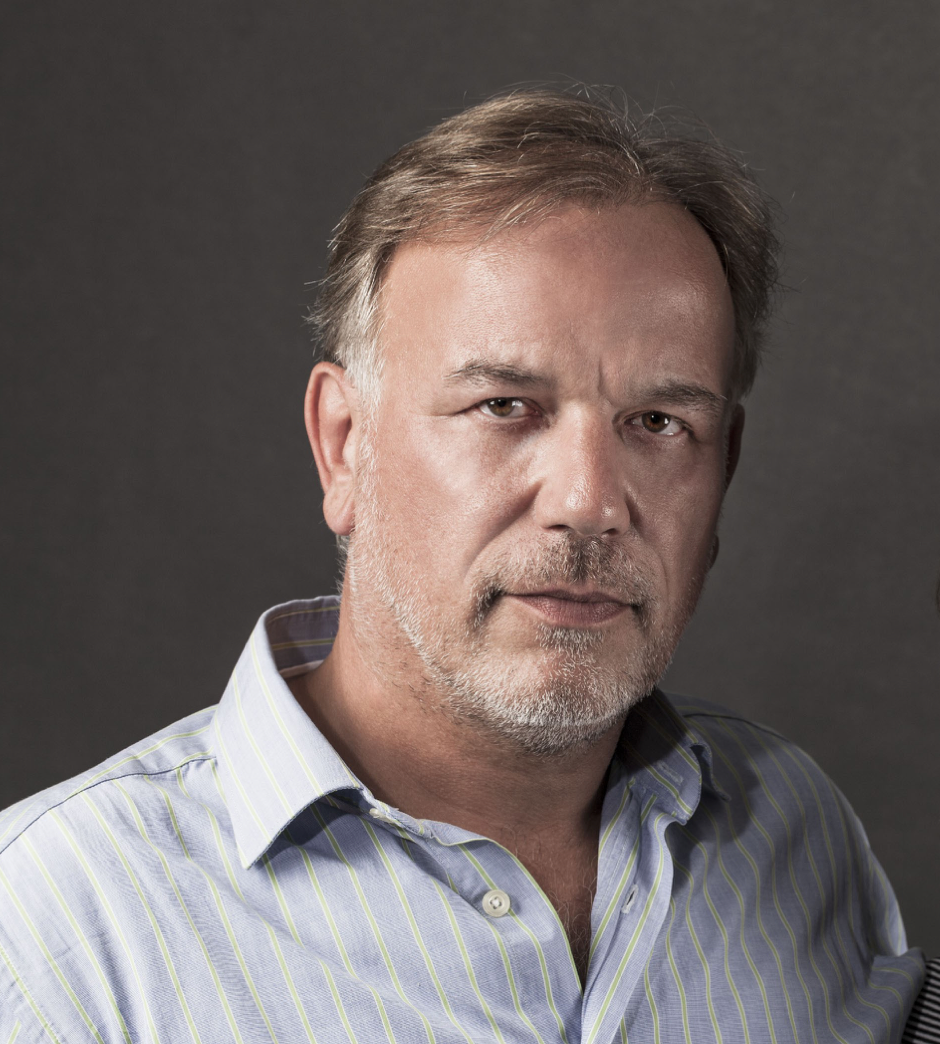
*Michael is a business economist (FH), startups investor and CEO/CFO on demand. As a fintech and financial expert, he focuses on managing fintech applications to the Swiss Financial Market Supervisory Authority (FINMA) as well as advising board members and investment committees.