


Four European startups have been recognized among the top 50 digital health ventures of 2025. These ventures, featured in CB Insights’ annual Digital Health 50, originate from France, Sweden, Austria, and the UK, and are transforming diagnostics, clinical workflows, and preventive care.
The 2025 Digital Health 50, released on October 2025, highlights private companies with strong growth potential, focusing on early-stage players with significant market traction, high-quality investors, and growing teams.
These 50 companies were selected from a pool of over 12,000 companies based on CB Insights data and predictive signals, as well as its proprietary Mosaic Score, a metric which assesses a company’s health, growth, and success potential.

Of the 50 startups selected in 2025, four are headquartered in Europe. These companies, which operate across clinical workflow automation, health risk monitoring, and health assessments, have witnessed significant growth in 2025, making them poised for continued momentum in 2026.
Nabla (France)
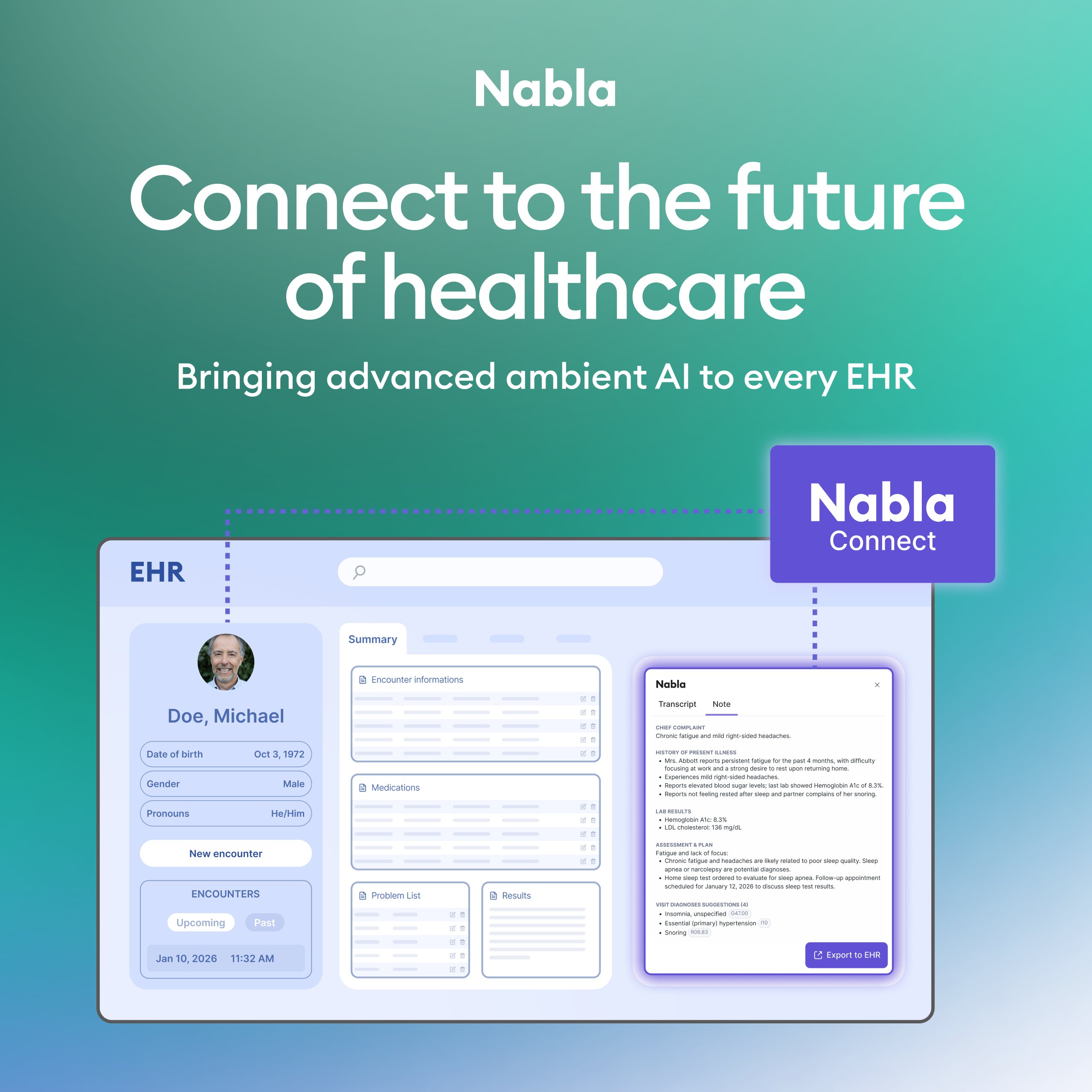
With a Mosaic Score of 909 out of 1,000, Nabla stands as the most prominent digital health startup in Europe and the second most promising globally.
Founded in 2018 and headquartered in Paris, Nabla is an AI assistant in clinical care, helping clinicians generate high-quality notes in seconds and streamline multiple workflows through ambient documentation, dictation, and real-time coding support.
The platform combines advanced ambient AI, dictation and clinical nudges to fit naturally into a clinician’s workflow, and integrates with all major electronic health record (EHRs), including Epic, Cerner, athenahealth, NextGen, Greenway Health, and Opus. It supports more than 35 languages, and is used across over 130 health systems and provider groups.
Nabla claims its technology enables clinical documentation time to be reduced by more than half, leads to 1.5 times more appointments, and mitigates clinician burnout by 27%. The company says it “has multiplied its revenue by five” over the past six months and now supports over 85,000 clinicians.
Currently, the company is building a comprehensive adaptive agentic platform, expanding beyond documentation into a “more agentic model of clinical AI.” This new evolution of its technology would help with coding, proactive EHR actions, and would support professionals across new care settings and clinical roles.
Nabla has raised a total of US$120 million in funding from HV Capital, Highland Europe, Cathay Innovation, and other investors. It secured its latest round in June 2025, raising US$70 million in a Series C funding round.
Neko Health (Sweden)
With a Mosaic Score of 835 out of 1,000, Neko Health is the second most promising digital health startup in Europe and the 19th one globally.
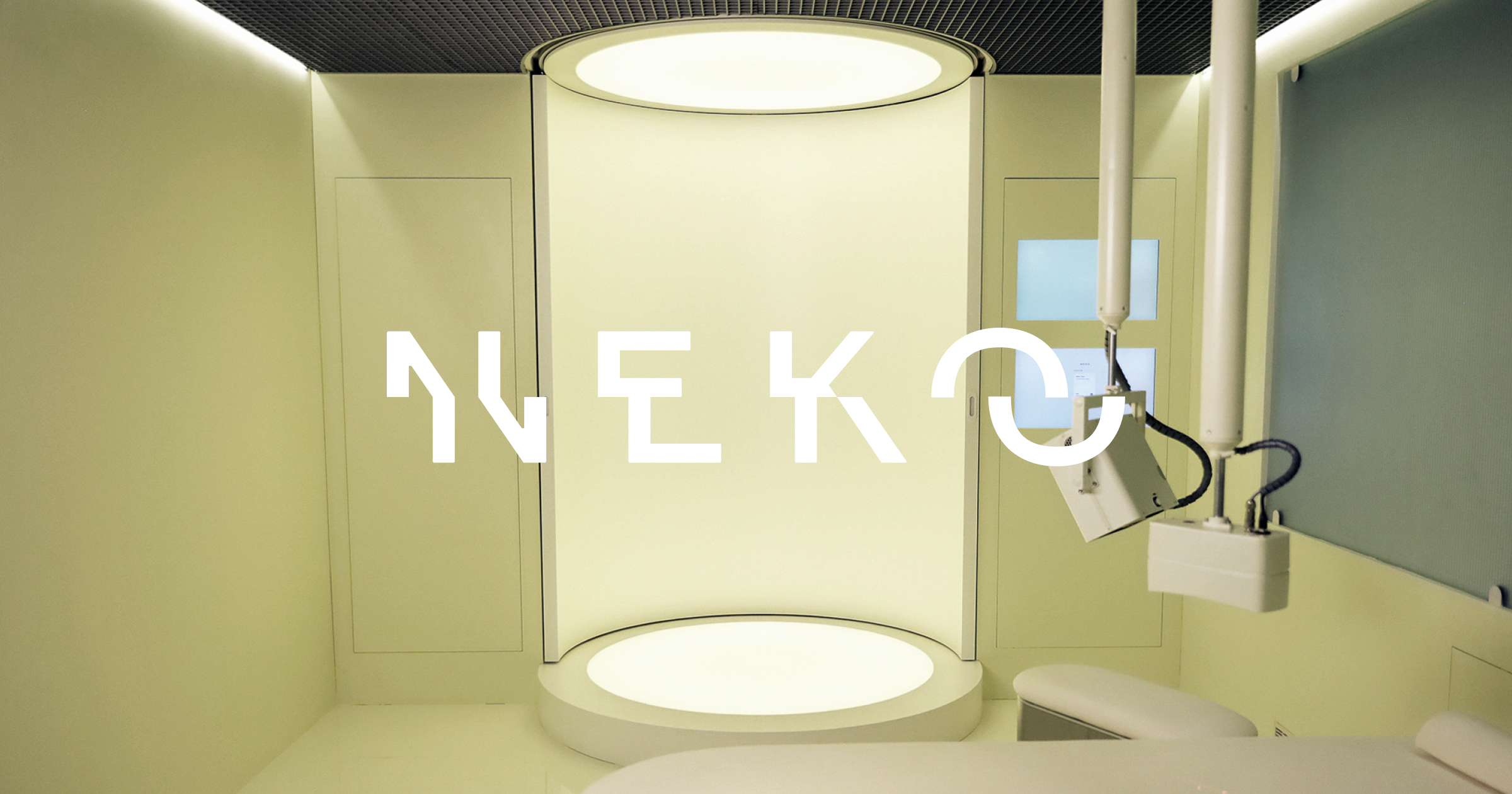
Founded in 2023 and headquartered in Stockholm, Neko Health offers comprehensive body scans to monitor risk factors for a range of health conditions from pre-diabetes to cancer. It combines advanced technology, thoughtful design, and clinical care to deliver fast, actionable insights that help detect potential health issues early and support long-term wellbeing.
At the heart of Neko Health’s offering is the Neko Body Scan, a 60-minute comprehensive, non-invasive and radiation-free assessment that captures millions of health data points. Using proprietary sensors and blood analysis, results are delivered on-site within minutes, followed by a consultation with a medical professional to discuss personalized health findings.
Neko Health says it has witnessed significant growth, delivering six times more scans in 2025 than in 2024, with global signups now exceeding 300,000 people. It also claims that of the thousands of scans it completed in Stockholm during 2024, 1.2% revealed life-threatening conditions, and 6.4% found “medically significant findings requiring clinical attention,” underscoring the value of proactive, technology-enabled health screening in identifying serious conditions early.
Neko Health currently offers the Neko Body Scan experience at six locations in Stockholm, London and Manchester. Its New York City location is slated to open in the spring of 2026, marking its first in the US and representing the company’s next phase in scaling its preventive, technology-driven care.
Neko Health secured its last round in January 2025, raising US$260 million in a Series B funding round and reaching a valuation of US$1.8 billion.
PocDoc (UK)
With a Mosaic Score of 704 out of 1,000, PocDoc is the third most promising digital health startup in Europe and the 46th most promising globally.
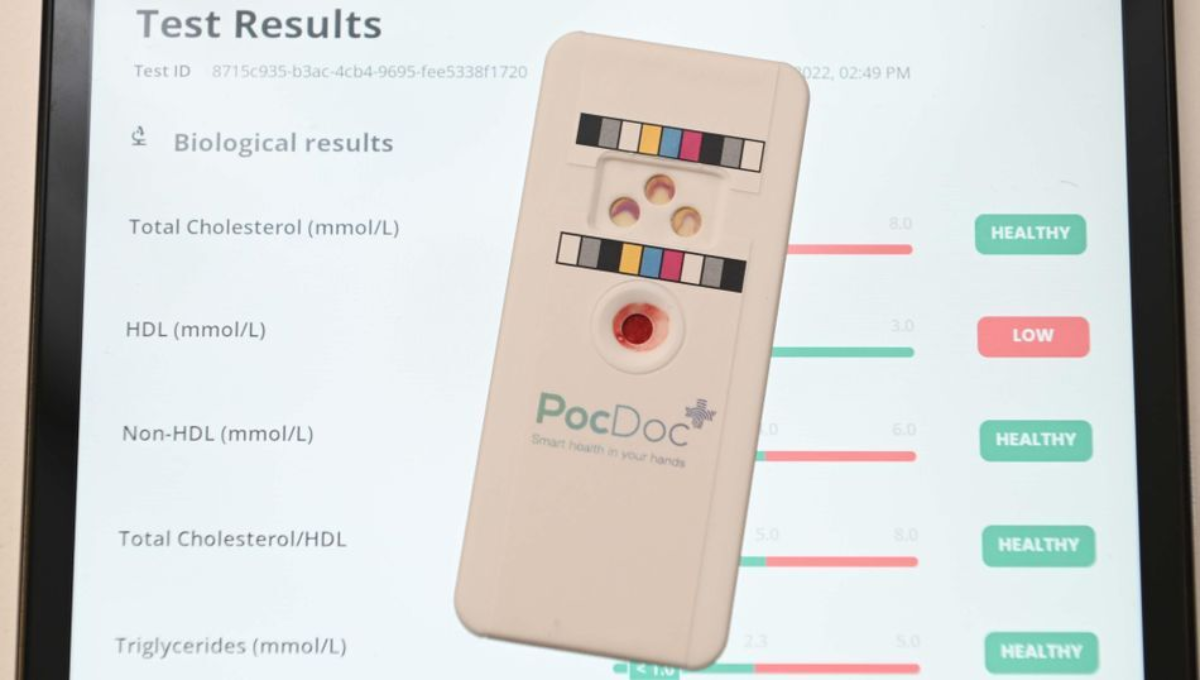
Founded in 2019 and headquartered in Cambridge, PocDoc is an app-based technology platform that is leading the way in smartphone-based rapid testing for cardiovascular, metabolic, and renal disease. The company provides accessible and efficient health assessments in under ten minutes, allowing anyone with a smartphone or tablet to test themselves for a range of major diseases or conditions via a fingerprick of blood, receive a full health assessment that puts those results in context and then be offered solutions to address any health-related issues that arise.
The PocDoc platform is designed to work with the company’s proprietary, quantitative blood tests, which have been developed in-house and are focused on preventative disease areas covering cardiovascular disease, metabolic disease and renal disease. However, the platform can also integrate other existing rapid tests, digitize the results, and provide the same health assessment and follow-on care pathways.
PocDoc, which has won three Innovate UK awards and MedTech Breakthrough award for its technology, says it secured the UK’s largest ever pre-Series A in November 2024, surpassing GBP 10 million (US$13.4 million) in total funds.
Xund (Austria)
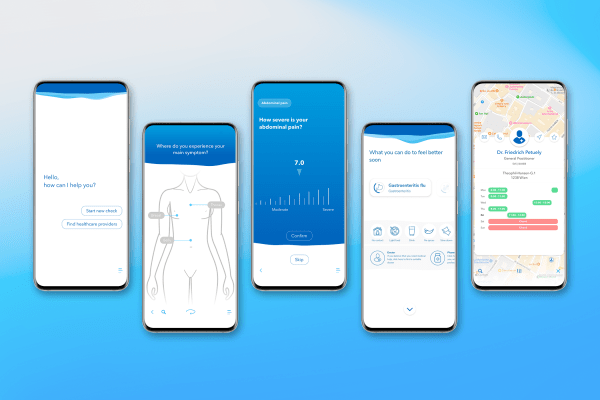
With a Mosaic Score of 693 out of 1,000, Xund is fourth most promising digital health startup in Europe and the 47th most promising globally.
Founded in Vienna in 2018, Xund specializes in building industry-leading software-as-a-medical device (SaMD), enabling digital interactions from prevention to diagnosis. The company provides the technological foundation for compliant digital healthcare products, building solutions that help guide patients to the right point of care, support medical professionals with fast access to validated medical knowledge, and enable digital-first healthcare interactions at scale.
Xund, which serves more than 10 million patients, secured a EUR 6 million (US$7 million) in pre-Series A in March 2025 to accelerate expansion in the German, Austrian and Swiss (DACH) region and the UK, driven by increasing demand for solutions with a Medical Device Regulation (MDR) certification.
Featured image: Edited by Fintech News Switzerland, based on image by semihymc via Freepik