


Cash, cheque or card: consumers have long had a choice at checkout.
Today, developments in artificial intelligence and the rise of cryptocurrencies are expanding these options further and more rapidly.
This shift is changing not only how people make payments, but also how they move money, establish trust, and create value.

Looking ahead to 2026, payments are becoming more personalised, predictive, and interoperable across traditional and new platforms.
Equally important is the foundational work behind these innovations: building infrastructure, establishing standards, and forming partnerships to support these emerging payment experiences.
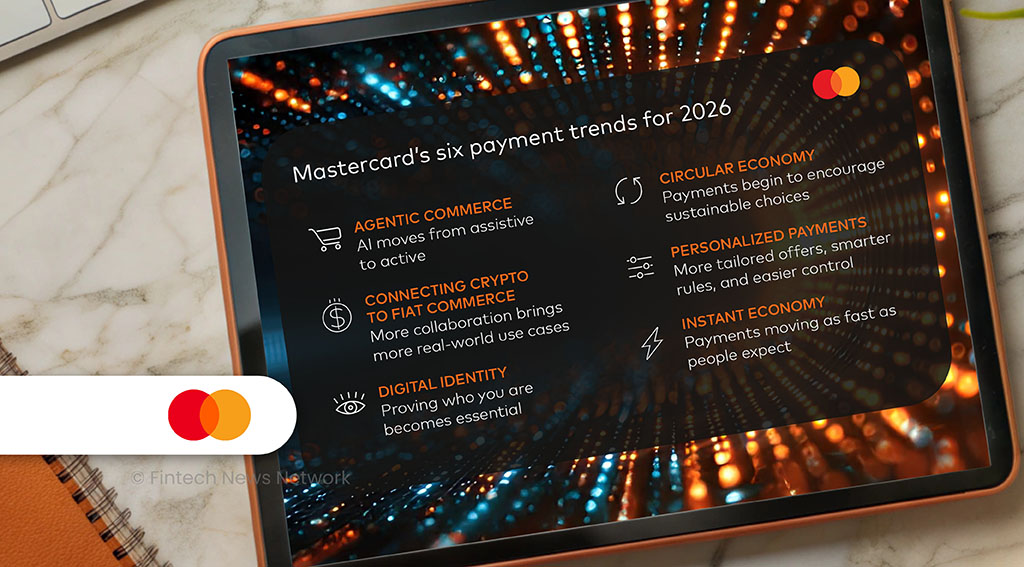
Securing agentic commerce
In 2025, generative AI demonstrated its potential beyond recommendation engines, with AI-powered agents beginning to manage transactions for both consumers and businesses.
Agentic commerce is expected to expand in 2026, alongside stronger security measures.
In 2026, the industry will actively verify that agents are legitimate and strengthen authentication.
It will also work to reduce fraud and capture intent if an AI-managed transaction encounters issues.
“You can automate commerce, but you can’t automate trust,”
an expert noted.
Connecting crypto to fiat commerce
While cryptocurrencies have dominated financial headlines, mainstream adoption beyond investment remains limited.
Regulatory clarity in the US and Europe regarding stablecoins, cryptocurrencies pegged to government currencies, has provided the financial sector with the confidence to explore commercial uses.
In 2026, ecosystem players are expected to collaborate more closely.
This will make it easier and safer for people to pay and transfer money with stablecoins, including wallet payouts, on-chain purchases, and cross-border settlement.
Doubling down on digital identity
Mastercard research found that 80% of consumers worldwide were targeted by scams in the past year.
As the digital ecosystem expands, robust identity verification is becoming increasingly critical.
Digital identity wallets will simplify access to financial, government, and other services, including age verification, and enable verified aliases for crypto transactions, reducing reliance on complex addresses often exploited in fraud.
Expanding digital ID services in developing markets could also accelerate inclusion in the digital economy.
The goal is “digital identity that feels as natural and reliable as making a payment.”
Redefining consumption for the circular age
Mastercard research shows that many consumers, particularly Gen Z, are embracing the circular economy, which emphasises reuse, resale, and repair.
This shift is creating regenerative payment loops, where transactions encourage sustainable behaviour through micro-transactions and secure peer-to-peer payments.
Examples include refill schemes, take-back programmes, and deposits for reusable items such as coffee cups.
For consumers, these models make participation straightforward; for retailers, benefits include lower packaging costs and strengthened loyalty.
Personalising payments, benefits and risk
Payments and banking are increasingly designed to fit the consumer rather than the other way around.
In 2026, tools and platforms will allow users to customise payment methods according to their spending habits and financial goals, such as using credit for large purchases and debit for everyday expenses.
Insights drawn from billions of transactions, including nearly 160 billion in 2024, will enable personalised content and offers.
Small businesses and borrowers with limited credit histories may also benefit from advanced analytics and permissioned open finance data to better assess creditworthiness.
Enabling the instant economy for everyone, everywhere
In-store checkout may become more seamless through biometric verification, while one-click online payments could be widely available by 2030, aided by global tokenisation that reduces manual entry and static passwords.
Real-time payments are expanding with initiatives such as Mastercard Transaction Stream, which enables same-day settlement and improves capital availability.
With cross-border payments projected to exceed US$250 trillion by 2027, innovation is expected in areas such as alias-based remittances and faster, more secure cross-border solutions, helping small businesses access international markets.

Featured image credit: Edited by Fintech News Switzerland, based on image by wahyu_t via Freepik