


Close Menu
    • Top Fintech Startups in Switzerland
    • Switzerland Fintech Startup List
    • Virtual Banking
    • Open Banking
    • Online Mortgage
    • Regtech
    • Fintech Events
    • Submit Press Release
    • Submit Startup
    Facebook LinkedIn X (Twitter) Instagram RSS
    • About Fintech News Network
    • Media Kit
    • Contact Us
    • Work With Us
    • Newsletter
    • Submit Press Release
    • Submit Startup
    • Impressum
    Fintech Schweiz Digital Finance News – FintechNewsCH
    part of Fintech News Network

    Fintech News Network

    Facebook LinkedIn X (Twitter) Instagram RSS
    Free Newsletter
    • Blockchain
    • Wealthtech
    • Lending
    • Mobile Payments
    • Insurtech
    • PFM
    • AI
    • Funding
    • Various
      1. Germany
      2. London
      3. USA
      4. Austria
      5. Liechtenstein
      6. View All

      BaFin Fines Deutsche Bank €8 Million Over Postbank Migration Issues

      November 13, 2026

      Affirm Acquires Ratepay as Nexi Focuses on Core Activities

      November 10, 2026

      Eurex Clearing to Handle Digital and Traditional Assets Together

      November 4, 2026

      Deutsche Börse Extends Access to DAX 40 Stocks Beyond Xetra Hours

      October 28, 2026

      Zodia Markets Names Crypto Finance Founder Jan Brzezek as CEO

      November 24, 2026

      Payhawk Reaches US$2 Billion Valuation in Goldman Sachs-Led Series C

      November 20, 2026

      Griffin Raises US$20M to Add Card and Stablecoin Services

      November 13, 2026

      HSBC UK Launches Stripe-Powered Tap to Pay for Small Businesses

      November 12, 2026

      PayPal Appoints New Leaders to Execute Its Three-Year Strategy

      November 24, 2026

      CrowdStrike Agrees to Buy Zscaler in US$43.9 Billion Share Deal

      November 24, 2026

      Databricks Eyes US$225 Billion Valuation in Early Funding Talks

      November 24, 2026

      Lauren Boyman Joins Broadridge from KPMG as Marketing Chief

      November 19, 2026

      Revolut Austria Banking Branch to Launch in 2027 With Local IBANs

      November 5, 2026

      BingX EU Secures MiCA Licence for Crypto Services in Europe

      October 15, 2026

      Bitget Pauses Withdrawals Following US$351.6M Hot Wallet Hack

      September 25, 2026

      Bybit Payments Secures Austria EMI License for European Payment Services

      August 5, 2026

      Swiss and Liechtenstein Banks Resist Core Banking System Overhaul

      November 11, 2026

      Swiss Blockchain Survey 2026: Banks on Stablecoins and Tokenized Funds

      October 20, 2026

      Bank Frick Enables Real-Time Euro Transfers and CHF Payment Receipts

      July 21, 2026

      Celsion Bank Begins Operations, Combining Digital Assets and Traditional Banking

      April 10, 2026

      Enfuce Appoints Vanessa Schotes as Chief Operating Officer

      November 24, 2026

      Lauren Boyman Joins Broadridge from KPMG as Marketing Chief

      November 19, 2026

      Top Finfluencers in Switzerland in 2026

      November 10, 2026

      88% of Tech Founders Walk Away with Zero Exit Value

      November 9, 2026
    • More
      • Fintech Events
      • Top Swiss Fintechs in 2026
      • Swiss Fintech Startup List
      • Accelerators
    Fintech Schweiz Digital Finance News – FintechNewsCH

    Fintech News Network

    Home»Security»How Can Financial Institutions Put a Stop to Account Takeover Attacks
    Security Sponsored

    How Can Financial Institutions Put a Stop to Account Takeover Attacks

    Greg Hancell, Director Product Management - Data Strategy, OneSpanGreg Hancell, Director Product Management - Data Strategy, OneSpanNovember 30, 20216 Mins Read
    LinkedIn Facebook Twitter Telegram Copy Link Email
    How Can Financial Institutions Put a Stop to Account Takeover Attacks
    Share
    Facebook Twitter LinkedIn Telegram Copy Link Email
    Free Newsletter

    Get the hottest Fintech Switzerland News once a month in your Inbox

    Financial Institutions (FI’s) can detect and prevent account takeover attacks using continuous monitoring and adaptive multi-factor authentication.

    Account takeover (ATO) fraud is one of the top causes of fraud losses for banks and financial institutions. An account takeover occurs when a customer’s bank account is digitally ‘broken into’ and acted on by an attacker.

    The methods and techniques attackers use to fraudulently obtain access to a customer’s account credentials are continually evolving.

    These include obtaining data from data breaches, malware, phishing, and other social engineering attacks such as phone scams (read more on common fraud techniques).

    Account takeover is increasing due to lower barriers of entry, high rewards. lower risk of consequence and a fast movement by companies to try and offer digital services in reaction to the pandemic.

    Additionally, attackers have more tools than ever available from the underground market.

    They have more data to utilise, due to a record breaking 37 billion personal data records compromised in 2020 and more potential victims, companies and users that are new to digital services.

    This results in personal data being available to attackers on demand, who can put it to use in an account takeover.
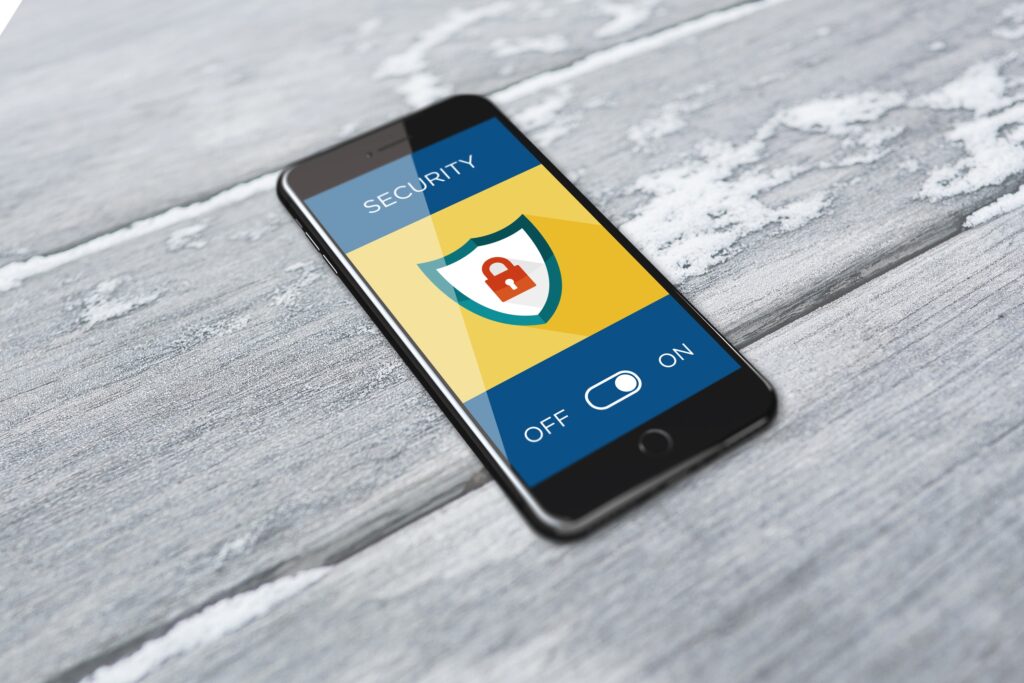
    Source: Pixabay

    Attacks are becoming more advanced and automated, for example an emulation attack with malware which was executed in December 2020 resulting in millions of users accounts being attacked in hours, despite the bank using SMS one time passwords.

    The attackers were able to perfectly emulate devices, breaking security relying on device fingerprinting and intercept the SMS OTP without the victim knowing.

    These attacks can result in identity theft, credentials / OTP’s for attacking a login / recovery process and or personal information to increase the success of social engineering we cannot ignore the threat this poses.

    From a user perspective, these attacks might result in fraudulent payments to new beneficiaries and thus the loss of their savings, losing access to the account, as the attacker changes the authentication method such as registering a new device or changing the password.

    Also the attacker may apply for a new product using the customer’s personal data.

    For financial institutions (FI’s), the impact of account takeover attacks can go well beyond financial losses.

    The FI’s need to move fast to reduce the likelihood of the attack continuing / scaling and recover from the attack itself. The attack can lead users to lose trust in the FI and can impact consumer confidence and growth.

    How Financial Institutions Can Get Better at Detecting and Preventing Account Takeover Attacks

    Source: Shutterstock

    Account takeover attacks cost FI’s billions in payouts and compensation to users. To reduce these losses, FIs must find ways to detect and prevent an attacker from trying to obtain access to an account, and when an attacker is attempting to carry out an action or transactions fraudulently inside a users account.

    Preventing attacks relies on establishing trust with the user and determining their behavior. For example aside from the credentials / OTP being correct, is what they are doing typical for them.

    Trust, is not static. Trust is fluid, everchanging and may increase or decrease based on interactions and outcomes, it is therefore crucial for trust to be determined in real-time.

    In short, FI’s need to address the issue of trust– when can they trust that a genuine user is accessing and using their account, how can they determine if a genuine user is being socially engineered to make a transfer they should not, and how can they determine when an attack is underway?

    To solve this problem, FIs need a profoundly innovative approach – one that enables the collection and analysis of vast cross-channel data to detect and react to attacks in real-time.

    Continuous monitoring is the real time collection and behavioral understanding of users and devices.

    Allowing the understanding of the ‘normal’ behavior of the user – such as the way they interact with the device, how they type, swipe and drag across a page, and how they typically establish and interact with sessions, the types of transfers they make and many more.

    This creates a profile of their normal behavior.

    Machine learning utilises 1000’s of features (intelligence points of a user their device and location) to contrast the normal behavior of the user against suspicious behavior, such as the behavior of a bot or attacker.

    When suspicious behavior is detected, FI’s can react immediately such as request additional authentication from the user, change the authentication approach if a device is compromised and or challenge access or transactions taking place.

    If the users authentication and behavior are deemed low risk then they can proceed. If not, the process is stopped and the attack is prevented.

    The capability to learn from all attacks, indicators of compromise (known malicious data attributes) and fraud enables machine learning models to outperform typical rule sets optimising costs and reducing losses.

    Why Financial Institutions Need to Make ATO Prevention a Priority

    Source: iStock

    Static credentials such as usernames, email addresses and secret answers are vulnerable to attacks due to mass data breaches and users repeat credentials across multiple websites, social media profiles and sign-up accounts.

    Authenticating users at login and using credentials alone is no longer an option.

    Analyst firm KuppingerCole argues that only requiring a username/password for access to online or mobile banking systems is grossly insufficient for account security.

    Financial institutions must continuously monitor the user’s actions and behavior to detect suspicious actors and challenge with setup-up security when risk is detected.

    Additionally, the presence of malware on mobile devices makes users vulnerable to SMSishing attacks and SMS one time password (SMS OTP) interception.

    The increasing sophistication of attacks utilising a blend of technology such as malware, device emulation and session simulation increases the scale of attacks meaning millions of users can be impacted in a day.

    FI’s that use static credentials and SMS OTP are vulnerable to high scale, high impact attacks.

    How Intelligent Adaptive Authentication Technology Can Stop Account Takeovers

    Source: iStock

    Intelligent adaptive authentication (IAA) provides a secure frictionless experience for users to authenticate.

    Continuous monitoring with contextual understanding enables real time decision making and provides the relevant authentication method(s) relevant to the risk and friction.

    The technology uses real-time risk analysis to determine the most suitable authentication method(s) based on the level of risk derived from the context of what a user is doing and the environment they are interacting in i.e. device risk.

    Tailoring the authentication flow to each unique interaction reduces friction and fraud. As the user’s particular contextual patterns and circumstances evolve, the technology is intelligent enough to recognise these changes and adapt.

    OneSpan IAA enables FI’s to deliver digital experiences users love.

    By understanding their behavior and intentions whilst automating authentication decisions resulting in greater UX, reduced operational costs and a reduction in fraud.
    OneSpan

    Featured image credits: Pixabay

    OneSpan
    Share. Facebook LinkedIn Twitter Telegram Copy Link Email

    Author

    Avatar photo
    Greg Hancell, Director Product Management - Data Strategy, OneSpan

    Greg Hancell has a comprehensive understanding of fraud and risk management to catch known and emergent fraud. Greg is a global fraud consultant that focuses on people, process and tools to enable Financial Institutions to transform from reactive to proactive to identify financial crime and drive down losses. Greg has a keen interest in the utilisation of machine learning, defense in depth and real time monitoring solutions. In the presentation, he will discuss how applying continuous behavioural monitoring with multi-layered online fraud detection solution can increase trust and reduce fraud.

    Related Posts

    CrowdStrike Agrees to Buy Zscaler in US$43.9 Billion Share Deal

    November 24, 2026

    Rivero’s Amiko Goes Live at SIX for Debit Card Fraud and Dispute Claims

    November 19, 2026

    CrediBill Suspends Service After Cyberattack Amid Signs of Data Theft

    November 16, 2026

    Keith Fenner Succeeds Asger Hattel as Signicat CEO

    November 11, 2026

    Crédit Mutuel Arkéa Hack Involves Reported €100 Million Loss

    November 9, 2026

    Checkout.com Begins Rolling Out Visa Payment Passkey to Merchants

    October 30, 2026

    CTO Craft Con: Fintech Brings Tech Leaders to London This November

    October 29, 2026

    81% of Financial Firms Use AI. Only 14% Call It Transformational

    October 21, 2026
    AI Sponsored

    81% of Financial Firms Use AI. Only 14% Call It Transformational

    October 21, 2026
    Fintech Newsletter
    Subscribe to the most important Fintech Switzerland News
    Follow Us
    • Facebook
    • X / Twitter
    • LinkedIn
    • Instagram
    Swiss Fintech Startup Directory

    Swiss Fintech Startup Directory

    Top Swiss Fintech Startups

    Top Fintech Startups in Switzerland for 2026

    Upcoming Fintech Events
    Country
    28th NextGen Payments & RegTech Forum 2027
    March 4, 2027
    Switzerland
    -
    Zurich
    Agentic Automation in Finance Summit EU 2027
    April 15, 2027
    Germany
    -
    Frankfurt am Main
    AI & Big Data Expo Global 2027
    February 3, 2027
    -
    February 4, 2027
    United Kingdom
    -
    London
    Baltic Fintech Days 2027
    May 11, 2027
    -
    May 12, 2027
    Estonia
    -
    Tallinn
    CfC St. Moritz 2027
    January 13, 2027
    -
    January 15, 2027
    Switzerland
    -
    St. Moritz
    Promote Event View More
    Whitepapers & E-Books
    The Future of Competitive Advantage in Banking & Payments
    The Future of Competitive Advantage in Banking & Payments
    Bottomline
    American Newsletter

    Fintech News America

    Australia Fintech Map

    Australia Fintech Map

    Philippines Fintech Report

    SINGAPORE FINTECH REPORT

    Singapore Fintech Map 2025

    Indonesia Fintech Report

    Indonesia Fintech Map 2025 banner

    UAE Fintech Report

    UAE Fintech Report 2024

    Free Business Accounts

    Navigation
    • About Fintech News Network
    • FNN Media Kit
    • Work With Us
    • Contact Us
    • Fintech Switzerland Newsletter
    • Submit Press Release
    • Submit Fintech Startup
    • Datenschutzerklärung / Impressum
    Other Fintech News Network Publications
    Fintech News Switzerland
    Fintech News Singapore
    Fintech News Malaysia
    Fintech News Hong Kong
    Fintech News Philippines
    Fintech News Network Indonesia
    Fintech News Network Australia
    Fintech News Baltic
    Fintech News Nordics
    Fintech News America
    Fintech News UAE
    Fintech News Africa
    Get Informed

    Subscribe to Updates

    Subscribe to the most important Fintech Switzerland News

    Facebook LinkedIn X (Twitter) Instagram RSS
    • About Fintech News Network
    • FNN Media Kit
    • Work With Us
    • Contact Us
    • Fintech Switzerland Newsletter
    • Submit Press Release
    • Submit Fintech Startup
    • Datenschutzerklärung / Impressum
    © 2015 - 2026 Copyright CK Finanzpro GmbH. All Rights reserved.

    Type above and press Enter to search. Press Esc to cancel.

    Fintech Schweiz Digital Finance News - FintechNewsCH
    Manage Consent

    Your Privacy Matters to Us

    To provide the best experiences, we use technologies like cookies to store and/or access device information. Consenting to these technologies will allow us to process data such as browsing behavior or unique IDs on this site. Not consenting or withdrawing consent, may adversely affect certain features and functions.

    Functional Always active
    The technical storage or access is strictly necessary for the legitimate purpose of enabling the use of a specific service explicitly requested by the subscriber or user, or for the sole purpose of carrying out the transmission of a communication over an electronic communications network.
    Preferences
    The technical storage or access is necessary for the legitimate purpose of storing preferences that are not requested by the subscriber or user.
    Statistics
    The technical storage or access that is used exclusively for statistical purposes. The technical storage or access that is used exclusively for anonymous statistical purposes. Without a subpoena, voluntary compliance on the part of your Internet Service Provider, or additional records from a third party, information stored or retrieved for this purpose alone cannot usually be used to identify you.
    Marketing
    The technical storage or access is required to create user profiles to send advertising, or to track the user on a website or across several websites for similar marketing purposes.
    • Manage options
    • Manage services
    • Manage {vendor_count} vendors
    • Read more about these purposes
    View preferences
    • {title}
    • {title}
    • {title}